PTSD Self-Care Tips

A Path to Healing

Post-traumatic stress disorder (PTSD) is a mental health condition triggered by experiencing or witnessing a terrifying event. Currently experienced by approximately 3.5% of the U.S. adult population; it is estimated that 1-in-11 people will be diagnosed with PTSD in their lifetime.[1]

The most common types of events leading to the development of PTSD include:[2]

  • Combat exposure

  • Childhood physical abuse

  • Sexual violence

  • Physical assault

  • Being threatened with a weapon

  • A serious accident (e.g., vehicle crash)

Many other traumatic events also can lead to PTSD; these include: the sudden, unexpected loss of a loved one,[3] life-threatening medical diagnosis, natural disaster, fire, mugging, robbery, plane crash, torture, kidnapping, terrorist attack, mass shooting and other extreme or life-threatening events.[4] 

Symptoms may include flashbacks, nightmares and severe anxiety, as well as uncontrollable thoughts about the event.[5] Most people who go through traumatic events may have temporary difficulty adjusting and coping, but with time and proper self-care, recovery can occur. If symptoms worsen, last for months or years, and interfere with your day-to-day functioning, you may have PTSD.

While trauma-focused psychotherapies are the most highly-recommended type of treatment for PTSD and provide the greatest evidence for recovery, you may wish to include some supportive self-care strategies. These include:
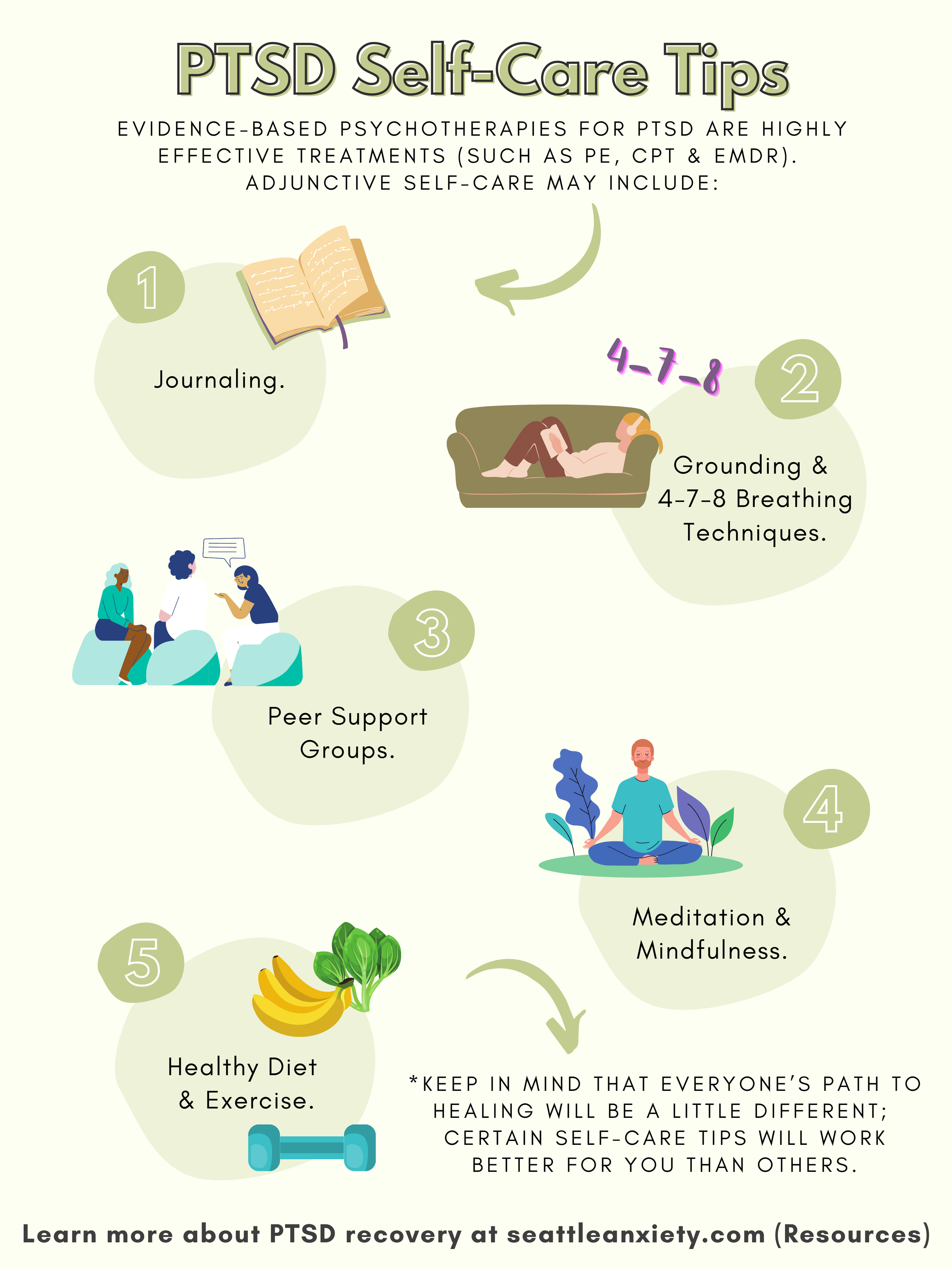
  1. Journaling

    Writing (including expressive, transactional, poetic, affirmative, legacy, and mindful writing) can increase resilience, and decrease depressive symptoms, perceived stress, and rumination.[6] Specifically, when people write and translate their emotional experiences into words, they may be changing the way their experiences are organized in the brain, resulting in more positive outcomes.[7] Guided, detailed writing can help people process what they’ve been through and help envision a path forward. Additionally, it can lower blood pressure, strengthen immune systems, and increase one’s general well-being. Resulting in a reduction in stress, anxiety, and depression, expressive writing can additionally improve the quality of sleep, leading to better focus, clarity and performance.[8]

    Research has found that the most healing of writing must contain concrete, authentic, explicit detail. Linking feelings to events, such writing allows a person to tell a complete, complex, coherent story, with a beginning, middle, and end. In this retelling, the writer is transformed from a victim into something more powerful: a narrator with the power to observe. In the written expression of what occurred, people can reclaim some measure of agency and control over what happened.[9]

    The following tips may help getting started with journaling:[10]

    • Make it a habit – try to stick to a routine.

    • Keep it simple – journal only for a few minutes; consider setting a timer. ‌

    • Do what feels right – find what’s best for you and go with it.

    • Write about anything, with any type of pen/pencil, in any type of book – there are no rules, this journal is yours.

    • Get creative – write lists, make poetry, draft a letter to someone, doodle or draw art.

    • Aim small, win big keep in mind that journaling isn’t a “magic fix”, but it will help and provide benefit, and will give back the effort you put in.

  2. Grounding and 4-7-8 Breathing Techniques

    Grounding strategies can help a person who is dissociating or overwhelmed by memories or strong emotions and help them become aware of the “here and now”. Examples of grounding techniques include:[11]

    • Stating what you observe around you (e.g., what time is it, what pictures are on the wall, how many books are on the table, etc.)

    • Decreasing the intensity of affect - clenching fists can move the energy of an emotion into fists, which can then be released; visualize a safe place; remember how you survived and what strengths you possess that helped you to survive the trauma.

    • Distract from unbearable emotional states - focus on the external environment (e.g., name red objects in the room or count objects nearby). Somatosensory techniques (e.g., toe-wiggling, touching a chair) can remind people of their current reality.

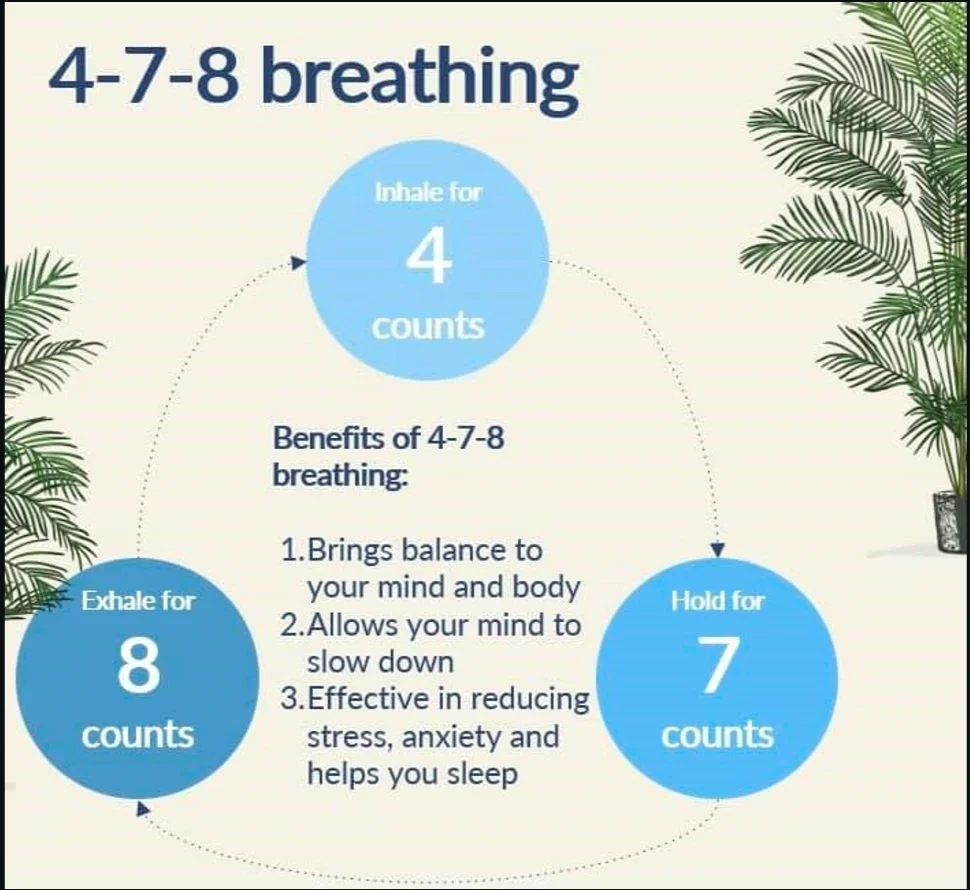
    4-7-8 breathing techniques - controlled breathing is one way to move our systems out of a state of panic. Inhaling activates the sympathetic nervous system (fight-or-flight), while exhaling activates the parasympathetic nervous system (rest and digest).[12] To employ the 4-7-8 breathing relaxing technique:

    • breathe in for 4 counts

    • hold the breath for 7 counts

    • exhale for 8 counts

    Note that any variation on these numbers should still elicit a calming response as long as the exhale is noticeably longer than the inhale.

  3. Peer Support Groups

    Within a peer support group, a person can discuss day-to-day problems with other people who have also been through trauma. While support groups have not been shown to directly reduce PTSD symptoms, they can help you feel better by giving a sense of connection to other people with similar, shared experiences. Further, peer support groups can help people cope with memories of a trauma or other parts of their life they are having difficulty dealing with as a result of the event. Dealing with and processing emotions such as anger, shame, guilt, and fear becomes easier when talking with others who understand.[13]

    Similarly, group therapy may be another outlet one can employ to receive support as they recover from trauma.

  4. Meditation & Mindfulness

    Meditation practices can combat symptoms of PTSD as they have elements of exposure, cognitive change, attentional control, self-management, relaxation, and acceptance.[14] Specifically, mindful meditation orients one’s attention to the present with curiosity, openness, and acceptance. Experiencing the present moment non-judgmentally and openly may lead to the approach of (and not avoidance of) distressing thoughts and feelings, thus potentially leading to the reduction of one’s cognitive distortions.[15]

  5. Healthy Diet & Exercise

    A healthy neuro-nutritional diet is beneficial for both your mind and body. Good neuro-nutrition, based on a holistic and healthy diet of fresh fruits and vegetables, lean proteins, whole grains, nuts and seeds and spices and herbs, can improve moods and cognitive function, help reduce the risks of cognitive decline due to ageing as well as provide healthy nutrients to the rest of your body. Further, healthy neuro-nutrition can help improve the brain’s neuroplasticity (i.e., its ability to change) as well as neurogenesis (i.e., its ability to create new neurons.) Additionally, healthy neuro-nutrition helps to mitigate inflammation, which has been linked to a myriad of health deficits. Animal meats, hydrogenated oils, and many of the chemical and preservatives in processed foods have inflammatory qualities.[16] A healthy diet can also help address physical health conditions associated with PTSD, including diabetes, hypertension, and metabolic syndrome.[17]

    Glucose is a critical nutrient to fuel a healthy mind and brain, with the healthiest sources of glucose found in unprocessed plant-based complex carbohydrates. By incorporating a steady, balanced supply of these vegetables, fruit, beans, nuts, seeds and whole-grain products, one can additionally achieve better mood regulation. The PTSD Association of Canada notes: blood sugar is balanced by having meals spaced fairly evenly, and eating every three to four hours. Choosing unrefined carbs and balancing those meals with protein and fat help delay the absorption of the glucose into the bloodstream. This can help keep your blood sugar level even, for both mood stability and appetite control.[18]

    Exercise and other physical activity has been found to lessen the symptoms associated with PTSD. A 2022 meta-analysis by McKeon et. al., found that physical activity and structured exercise are inversely associated with PTSD and its symptoms. Moreover, exercise interventions may lead to a reduction in symptoms among individuals with, or at risk of PTSD.[19] Additionally, a 2021 meta-analysis by McGranahan and O'Connor notes that exercise training has promise for improving overall sleep quality, anxiety, and depression symptoms among those with PTSD.[20] The duration of exercise does not need to be significant in order to be effective. In fact, Pontifex et al., (2021) report that just twenty minutes of moderate intensity aerobic exercise has been shown to improve inhibitory control, attention and action monitoring.[21] To get the most out of one’s exercise, physical activity enjoyed outdoors has been shown to boost these beneficial effects.

It is important to keep in mind that the benefits of the afore-mentioned self-care tips will likely develop over time, following a consistent approach. Try not to get discouraged in the process and remember that some self-care tips will be more effective than others. Everyone’s path to recovery and healing will be different.

To learn more about PTSD, click here to access our interviews with experts on the subject; click here to access a multitude of articles including additional ways to recovery.

Contributed by: Jennifer (Ghahari) Smith, Ph.D.

Editor: Jennifer (Ghahari) Smith, Ph.D.

REFERENCES

1 “What is Post-traumatic Stress Disorder (PTSD)?” American Psychiatric Association (accessed 7-5-22) psychiatry.org/patients-families/ptsd/what-is-ptsd

2 Ibid.

3  “Post-traumatic Stress Disorder,” National Institute of Mental Health (accessed 6-22-20) www.nimh.nih.gov/health/topics/post-traumatic-stress-disorder-ptsd/index.shtml

4 “Post-traumatic Stress Disorder (PTSD),” Mayo Clinic (accessed 6-22-20) www.mayoclinic.org/diseases-conditions/post-traumatic-stress-disorder/symptoms-causes/syc-20355967

5 Ibid.

6 Glass, O., Dreusicke, M., Evans, J., Bechard, E., & Wolever, R. Q. (2019). Expressive writing to improve resilience to trauma: A clinical feasibility trial. Complementary therapies in clinical practice, 34, 240–246. https://doi.org/10.1016/j.ctcp.2018.12.005

7 “Writing Can Help Us Heal from Trauma,” Harvard Business Review (accessed 7-6-22) hbr.org/2021/07/writing-can-help-us-heal-from-trauma

8 Ibid.

9 Ibid.

10 “The Benefits of Journaling for Mental Health,” Diversified Rehabilitation Group (accessed 7-6-22) ptsdrecovery.ca/the-benefits-of-journaling-for-mental-health/

11 Melnick SM, Bassuk EL. Identifying and responding to violence among poor and homeless women. Nashville, TN: National Healthcare for the Homeless Council; 2000.

12 “Proper Breathing Brings Better Health,” Scientific American (accessed 2-16-22) www.scientificamerican.com/article/proper-breathing-brings-better-health/

13 “PTSD: Peer Support Groups,” U.S. Department of Veterans Affairs (accessed 7-6-22) www.ptsd.va.gov/gethelp/peer_support.asp

14 Baer RA. Mindfulness training as a clinical intervention: A conceptual and empirical review. Clinical Psychology: Science and Practice. 2003;10:125–143. doi: 10.1093/clipsy.bpg015.

15 Gallegos AM, Cross W, Pigeon WR. Mindfulness-based stress reduction for veterans exposed to military sexual trauma: Rationale and implementation considerations. Military Medicine. 2015;180:684–689.

16 “Neuro-Nutrition for a Healthier Brain,” PTSD Association of Canada (accessed 7-6-22) www.ptsdassociation.com/nutritional

17 McKeon, Grace; Steel, Zachary; Wells, Ruth; Fitzpatrick, Alice; Vancampfort, Davy; Rosenbaum, Simon. Exercise and PTSD Symptoms in Emergency Service and Frontline Medical Workers: A Systematic Review, Translational Journal of the ACSM: Winter 2022 - Volume 7 - Issue 1 - e000189 doi: 10.1249/TJX.0000000000000189

18 PTSD Association of Canada

19 McKeon, et. al.

20 McGranahan, M. J., & O’Connor, P. J. (2021). Exercise training effects on sleep quality and symptoms of anxiety and depression in post-traumatic stress disorder: A systematic review and meta-analysis of randomized control trials. Mental Health and Physical Activity, 20, 100385. doi:10.1016/j.mhpa.2021.100385

21 Pontifex, M. B., Parks, A. C., Delli Paoli, A. G., Schroder, H. S., & Moser, J. S. (2021). The effect of acute exercise for reducing cognitive alterations associated with individuals high in anxiety. International journal of psychophysiology : official journal of the International Organization of Psychophysiology, 167, 47–56. https://doi.org/10.1016/j.ijpsycho.2021.06.008

Manifestations of Childhood Trauma in Adults

Understanding Trauma

More than 70% of adults have experienced a traumatic event at some point in their lives.[1] Trauma exposure is classified as any event that threatens or causes death, injury, or personal integrity.[2] Such experiences can include: emotional, psychological, physical and/or sexual abuse, natural disasters, war, injuries, or neglect. Further, traumatic events can occur as repeated, long-term experiences or as one single incident.[3]

As discussed by Majer et al., (2010), children are particularly receptive to traumatic experiences due to the heightened plasticity of a developing brain,[4] as well as their reliance on the environment for emotional and cognitive development. A child’s environment directly influences gene expression and brain growth; the stress that one’s environment imposes can help or hinder development.[5] While a normal amount of stress is crucial for the strengthening of important neural connections involved in emotional regulation and response to stress,[6] extreme, frequent, or long-lasting stress, will cause the body to adapt by sending a myriad of chemical and hormonal stress signals throughout the brain, altering its functional components.[7,8] Specifically, the overabundance of the stress hormone cortisol, will weaken bodily functions, including immune function, memory, learning, and emotional regulation.[9] Therefore, if childhood trauma occurs and is not properly addressed, it can lead to cognitive impairment and psychological disorders in adulthood.[10] 

When a child's environment feels unsafe or threatened, there are various ways they will adaptively react in order to maintain a feeling of safety and protection. Such reactions include the development of extreme reactivity to stimulation, heightened sense of vulnerability, and the addition of attachment & neediness behaviors.[11] Additionally, research done by The National Scientific Council on the Developing Child (2005/2014) found that the adjustment of the stress-response system, through the strengthening of neural connections involved in fear and anxiety, causes the child to become stressed at a lower threshold.[12] Further, if a child doesn’t receive the proper emotional support and comfort following a traumatic experience, it can disrupt normal brain development and cause issues with emotional regulation and response to stress in adulthood.[13]

Symptoms of childhood trauma in adults

The intensity and type of traumatic exposure in childhood affects how it will appear in adulthood.[14] Traumatic experiences involving one’s caretaker pose the greatest risk to harming the child’s psychological state and development.[15] Additionally, traumatic experiences that are repetitive are more detrimental than a single episode;[16] as the rate of negative childhood experiences increases, so does the likelihood that the adult will experience symptoms.[17]

As it can be difficult for an adult to disclose childhood trauma,[18] the best indication of its existence is through the expression of conscious and unconscious symptoms. While the effects of childhood trauma manifest differently in everyone, common symptoms include: difficulty controlling emotions, impulsiveness, an increased response to stress, relationship instability, development of mental illnesses, dissociation, avoidance, and heightened anger.[19,20]

Many adults who experienced childhood trauma also suffer from memory and learning deficits.[21] Additionally, some adults are found to have high blood pressure and increased inflammation.[22] Childhood trauma can also lead to interpersonal relationship problems including the creation of a “disorder of hope”, in which new relationships are either idealized or hated.[23] Moreover, Su & Stone (2020) note that if traumatic experiences involve a toxic relationship with a caregiver or trusted adult, those dynamics can also be reenacted in the adult’s life, such as involvement with an abusive partner or becoming abusive themselves.[24]          

Link between childhood trauma and mental health

Traumatic experiences that occur during childhood can cause disruptions in adult psychological function and lead to depression, anxiety, post-traumatic stress disorder (PTSD), and dissociation.[25]

Adverse experiences in early childhood can cause changes to the structural and functional components of the body, including increased sensitivity to stress, increased cortisol, glucocorticoid resistance, and decreased hippocampal volume. All of these changes closely parallel the features present in depression, suggesting traumatic experiences increase the risk of developing depression in adulthood.[26] Consequently, there is a high prevalence of childhood trauma in people with depression. It is also common for anxiety symptoms to develop following a traumatic experience, due to the heightened sensitivity to stress and production of cortisol.[27] Further Berber Çelik Ç, Odacı H (2020), found that childhood trauma can lower self-esteem, indirectly leading to the development of depression and anxiety.[28]

In some cases, typically those involving interpersonal violence or assault, traumatic experiences can lead to post-traumatic stress disorder.[29] PTSD refers to the development of symptoms following a traumatic exposure;[30] these symptoms include the re-experiencing of the traumatic event through nightmares, recollections, intrusive images, or reactions to reminders of the event. It also includes avoiding stimuli related to the traumatic event, increased arousal, and mood and thinking disruptions. To qualify as a diagnosis of PTSD, the duration of these symptoms must transpire for more than one month.[31]      

Dissociation also can occur as a result of a childhood trauma, especially if the experience is life-threatening or imposed by a caretaker. Dissociation is a feeling of disconnect towards psychological constructs, including the body, environment, behavior, and memory.[32] Dependent on where the disconnection is occurring, an absence of emotions, disorientation with surroundings, feelings of separation from the body, problems with self-recognition, or disruptions in hearing can transpire.


Treatment

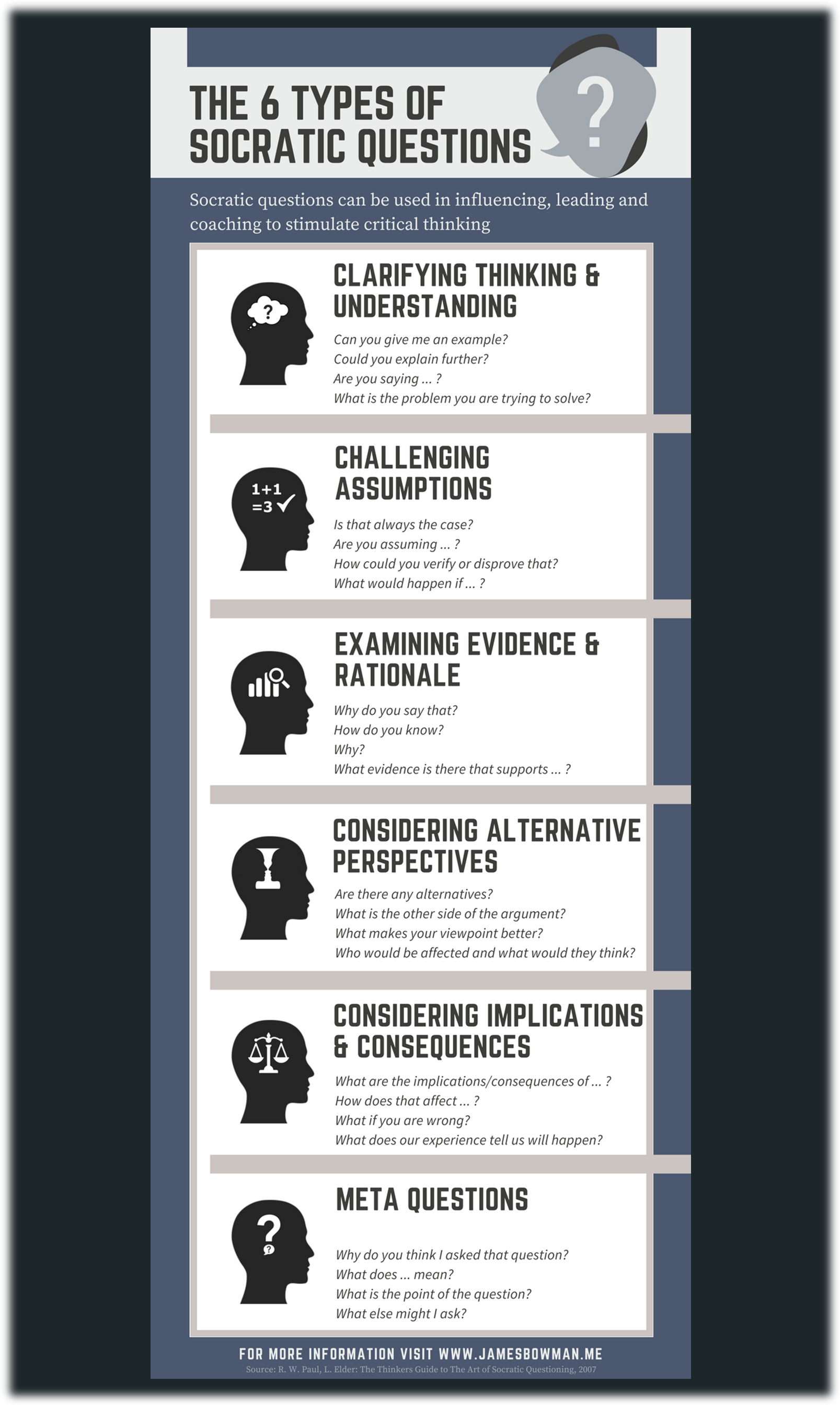
It is never too late to seek help for trauma that occurred during one’s childhood. Although every treatment will not be effective for everyone, options exist.[33] Exposure therapies such as exposure and response prevention (ERP) and prolonged exposure (PE) are some of the modalities used to treat trauma. Individuals are “exposed” to reminders of the traumatic event, but in a safe and comfortable setting. It is common to develop avoidance and fear for stimuli related to one’s traumatic experience, and exposure therapy gradually decreases those negative reactions.[34] Another treatment for trauma is cognitive-processing therapy (CPT). This type of treatment involves recognizing detrimental thought patterns and behaviors related to the trauma, and implementing healthier beliefs about the self, others, and the world. This process can be done through the use of writing assignments and Socratic questioning.[35] Other possible treatments include eye movement desensitization and reprocessing (EMDR), psychoeducation, and support therapy. 

Image Sources [36,37]

Q&A

SAS’ Psychotherapist, Dr. Brittany Canfield, discusses childhood trauma

1. In your experience, how does childhood trauma typically present itself in adults?

“Based on the literature, there are many physical and psychological manifestations of childhood trauma in adults. What we often see in clinical settings is individuals coming in to treat unmanageable anxiety symptoms, depression, mood dysregulation, attentional issues, and challenges maintaining daily functioning. For many, the catalyst for treatment is suffering from personal relationships or difficulty managing their workload. Childhood trauma also hides within the confines of addiction, both in substance and behavioral as well as within personality disorders. Common symptoms reported when seeking treatment include the following:

  • Difficulty falling asleep, staying asleep, or sleep disturbances (i.e. sleepwalking, sleep talking, nightmares, and night terrors).

  • Anxiety, panic attacks, social anxiety, and obsessive-compulsive symptoms.

  • Depression, suicidal ideation, history of suicidal ideation, plans, and/or attempts, self-harm, and/or mood dysregulation, often including anger.

  • Attentional issues such as difficulty focusing, retaining information and/or other issues with recall, increased distractibility, decreased memory, losing time, and/or other symptoms commonly associated with ADHD.

  • Physical or somatic symptoms called somatization, include but are not limited to frequent headaches, body aches, gastrointestinal issues, chronic fatigue, decreased immune function, and effects related to chronic stress.

  • Other symptoms may include diminished self-esteem and self-worth, poor outlook, compassion fatigue or burnout, codependence, poor boundaries, disturbances in interpersonal relationships, and the need to stay busy.”


2. Are there any ways to prevent childhood trauma from affecting adulthood? If so, what are the most effective ones?

“While there is no single preventive tool, one of the biggest factors mitigating the impact of childhood trauma is resilience. The research highlights the protective qualities that resilience has on childhood trauma, especially when that includes a stable and safe connection with just one adult during childhood. Support has also been shown to mitigate the impact of trauma in the way the individual is able to process the experience and progress toward posttraumatic growth.”


3. What types of treatments are most effective in helping adults who are suffering from childhood trauma?

“Given the differences in how children and adults process trauma, further explained below, bottom-up therapies accessing the part of the brain that was impacted during the trauma have been shown to be the most successful. These therapies include somatic-based or somatic experiencing therapies, EMDR, sensorimotor therapy, and expressive arts. Individuals may also benefit from more traditional talk therapies such as cognitive-behavioral therapy (CBT), mindfulness-based CBT, and dialectical behavior therapy (DBT), the latter focusing on resource-building. Additionally, therapy will focus on building skills that can assist the individual in regulating their nervous system and learning to utilize other mind-body activities such as yoga, meditation, and polyvagal techniques, all of which have been shown in the research to mitigate the effects of trauma.”


4. Are there any differences in how children process traumatic experiences compared to adults?

“This is an excellent question and a very important aspect of the impact of trauma on the brain in human development. In childhood, the prefrontal cortex is still developing and will continue to do so well into the mid-20s. With that being said, we process trauma from the bottom-up, that is, from the base or "bottom" of our brain. Bottom-up processing includes our sensory system, meaning that we experience and store the trauma from our senses, thus somatically. Other parts of our brain impacted by trauma include our limbic system and peripheral nervous system. When we experience trauma as an adult and often when childhood trauma is not a precipitating factor, we do so from our prefrontal cortex, which allows us to process the trauma using higher cortical thinking including cognitive processes such as reasoning, language, and awareness. You may wonder why this is so important? People who experience childhood trauma often do not have the words to describe or process what they experienced, because the part of the brain that is engaged in those processes was not the primary part of the brain in use when the trauma occurred. This makes it difficult for childhood trauma survivors to even acknowledge that the trauma happened let alone impacted them.”


5. Do you have any advice or anything you want to share with someone who may be suffering from childhood trauma?

“There is often fear and shame associated with childhood trauma, which can prevent individuals from seeking help. We often internalize social stigma (self-stigma) of seeking help out of fear of being invalidated, shamed, pathologized, or perceived as "crazy." You do not have to go at this alone, feel ashamed for what you have gone through, or carry the burden of your childhood trauma well into adulthood. If you have a childhood trauma history, it is recommended that you seek the help of a professional, join a support group, educate yourself on childhood trauma and often complex PTSD, and engage in activities that regulate the nervous system.”

If you have experienced childhood trauma and would like to explore possible treatment options, please reach out to a licensed mental healthcare provider who specializes in trauma recovery.

For more information, click here to access an interview with Psychologist Michele Bedard-Gilligan on trauma & recovery.

Additionally, you may click here to access an interview with Psychologist Bethany Brand on trauma & dissociation.

To access our PTSD Self-Care Tips, click here.

Contributed by: Amelia Worley

Editor: Jennifer (Ghahari) Smith, Ph.D.

References

1 Benjet, C., Bromet, E., Karam, E. G., Kessler, R. C., McLaughlin, K. A., Ruscio, A. M., Shahly, V., Stein, D. J., Petukhova, M., Hill, E., Alonso, J., Atwoli, L., Bunting, B., Bruffaerts, R., Caldas-de-Almeida, J. M., de Girolamo, G., Florescu, S., Gureje, O., Huang, Y., Lepine, J. P., … Koenen, K. C. (2016). The epidemiology of traumatic event exposure worldwide: results from the World Mental Health Survey Consortium. Psychological medicine, 46(2), 327–343. https://doi.org/10.1017/S0033291715001981 

2 Bedard-Gilligan, M., & Worley, A. (2022, May 13). Psychologist Michele Bedard-Gilligan on Trauma & Recovery - Psychology and Psychiatry Interview Series. Seattle Anxiety Specialists, PLLC: Psychiatry & Psychology. Retrieved May 17, 2022, from https://seattleanxiety.com/psychology-psychiatry-interview-series/2022/5/5/q6oxgila8beysefwg0qvb7gve9pb46

3 Harms, L. (2015). Understanding trauma and resilience. Macmillan Education. 

4 Majer, M., Nater, U.M., Lin, JM.S. et al. Association of childhood trauma with cognitive function in healthy adults: a pilot study. BMC Neurol 10, 61 (2010). https://doi.org/10.1186/1471-2377-10-61 

5 Stien, P., & Kendall, J.C. (2004). Psychological Trauma and the Developing Brain: Neurologically Based Interventions for Troubled Children (1st ed.). Routledge. https://doi.org/10.4324/9781315808888 

6 Ibid.

7 National Scientific Council on the Developing Child. (2005/2014). Excessive Stress Disrupts the Architecture of the Developing Brain: Working Paper 3. Updated Edition. http://www.developingchild.harvard.edu

8 Stien, P., & Kendall, J.C. (2004)

9 Excessive Stress Disrupts the Architecture of the Developing Brain. (2005/2014)

10 Majer, M., Nater, U.M., Lin, JM.S. et al. Association of childhood trauma with cognitive function in healthy adults: a pilot study. BMC Neurol 10, 61 (2010). https://doi.org/10.1186/1471-2377-10-61 

11 Van der Kolk, B. (2003). Psychological Trauma. American Psychiatric Pub. 

12 Excessive Stress Disrupts the Architecture of the Developing Brain. (2005/2014)

13 Stien, P., & Kendall, J.C. (2004)

14 Van der Kolk, B. (2003).

15 Everett, B., & Gallop, R. (2001). The link between childhood trauma and mental illness effective interventions for mental health professionals. SAGE. 

16 Su, W.-M., & Stone , L. (2020, July). Adult survivors of childhood trauma. Australian Journal of General Practice. Retrieved May 16, 2022, from https://www1.racgp.org.au/ajgp/2020/july/adult-survivors-of-childhood-trauma

17 Ibid.

18 Ibid.

19 Ibid.

20 Thatcher, T. (2018, November 20). Healing childhood trauma in adults. Highland Springs Clinic. Retrieved May 8, 2022, from https://highlandspringsclinic.org/blog/healing-childhood-trauma-adults/  

21 Stress disrupts the architecture of the developing brain. (2005)

22 Ibid.

23 Van der Kolk, B. (2003).

24 Su, W.-M., & Stone , L. (2020, July). 

25 Van der Kolk, B. (2003).

26 Christine Heim, D. Jeffrey Newport, Tanja Mletzko, Andrew H. Miller, Charles B. Nemeroff, The link between childhood trauma and depression: Insights from HPA axis studies in humans, Psychoneuroendocrinology, Volume 33, Issue 6, (2008), Pages 693-710, ISSN 0306-4530, https://doi.org/10.1016/j.psyneuen.2008.03.008.

27 Robert S Pynoos, Alan M Steinberg, John C Piacentini, A developmental psychopathology model of childhood traumatic stress and intersection with anxiety disorders, (1999), Pages 1542-1554, ISSN 0006-3223, https://doi.org/10.1016/S0006-3223(99)00262-0.

28 Berber Çelik Ç, Odacı H. Does child abuse have an impact on self-esteem, depression, anxiety and stress conditions of individuals? International Journal of Social Psychiatry. (2020)171-178. doi:10.1177/0020764019894618

29 Bedard-Gilligan, M., & Worley, A. (2022, May 13)

30 Ibid.

31 Wilson, J. P., & Keane, T. M. (2006). Assessing psychological trauma and Ptsd. The Guilford Press. 

32 Brand, B., & Worley, A. (2022, May 9). Psychologist Bethany Brand on Trauma & Dissociation- Psychology and Psychiatry Interview Series. Seattle Anxiety Specialists, PLLC: Psychiatry & Psychology.

33 Bedard-Gilligan, M., & Worley, A. (2022, May 13)

34 American Psychological Association. (2017, July). What is exposure therapy? American Psychological Association. Retrieved May 10, 2022, from https://www.apa.org/ptsd-guideline/patients-and-families/exposure-therapy  

35 American Psychological Association. (2017, July). Cognitive processing therapy (CPT). American Psychological Association. Retrieved May 9, 2022, from https://www.apa.org/ptsd-guideline/treatments/cognitive-processing-therapy

36 Bowman, J. (2017, February 9). Socratic questions revisited [infographic] · James Bowman. James Bowman. Retrieved May 17, 2022, from http://www.jamesbowman.me/post/socratic-questions-revisited/  

37 R. W. Paul, L. Elder: The Thinkers Guide to The Art of Socratic Questioning, 2007

Racial Trauma: Experiences and Implications for Therapeutic Settings

Mental Health Disparities 

Persistent and serious health disparities exist in the United States. Minorities suffer poorer health outcomes when compared to the majority, their White counterparts.[1] While there is conflicting evidence in the literature as to whether minorities suffer greater mental health consequences, a general consensus is that they report more psychological symptoms. Even without official diagnoses, minorities present with more subthreshold symptoms, which may reflect the poorer functioning reported within these marginalized groups.[2] 

When it comes to disparities in mental health care, the results are transparent. Numerous studies have found that individuals from minority groups, such as African Americans and Latinx, are less likely to receive treatment.[3] Even when they do receive it, they are less likely than Whites to receive the best care.[4] African Americans are also more likely to terminate treatment prematurely.[5] The most common reasons cited for dropout are not believing the treatment will work, not believing their problems are severe, and not being able to afford treatment.[6]

Racial trauma

Racial trauma (also called race-based traumatic stress) is defined as “the mental and emotional injury caused by encounters with racial bias and ethnic discrimination, racism, and hate crimes.”[7] In the United States, BIPOC (Black, Indigenous, People of Color) individuals are at a heightened risk of experiencing this trauma. Research has shown that race-based discrimination has a profound and detrimental psychological impact. It has even been reported to result in PTSD (post-traumatic stress disorder) symptoms.[8] 

Racial trauma comes in many different forms: microagressions, racism, discrimination (e.g., in the workplace), and police violence/brutality. Each of these will be defined and elaborated on further in the sections below. 

Racial trauma can be a direct experience of racism towards someone or transmitted intergenerationally (from generation to generation). The latter is referred to as generational trauma, which the American Psychological Association (APA) defines as “a phenomenon in which the descendants of a person who has experienced a terrifying event show adverse emotional and behavioral reactions to the event that are similar to those of the person himself or herself.”[9] Although most intergenerational trauma work has been done on Japanese individuals whose ancestors were forced into internment camps during World War II and ancestors of Holocaust survivors, a growing body of research is focusing on current generations of African-Americans and the ongoing discrimination they face.[10] Dr. Monicca WIlliams from the University of Connecticut has extensively focused on this issue and formulated a measure to assess anxiety stemming from racial discrimination. Out of 123 African-American students who took this survey in a study conducted by Williams et al. (2018), perceived discrimination correlated with higher rates of “uncontrollable hyperarousal, feelings of alienation, worries about future negative events and perceiving others as dangerous.”[11] Additionally, a meta-analysis by Pascoe and Smart Richman (2009), which consisted of 134 studies with multiracial samples, demonstrated an association between perceived discrimination and heightened stress responses, poorer physical health, and participation in unhealthy behaviors.[12]

Microaggressions

While most people would not consider themselves to be racist (e.g., do not commit hate crimes nor express blatantly racist sentiments), they may still hold racial biases and engage in subtle racially-motivated behaviors.[13] Harvard psychiatrists have characterized these as “brief and commonplace daily verbal, behavioral, or environmental indignities, whether intentional or unintentional, that communicate hostile, derogatory, or negative racial slights and insults toward People of Color.”[14] While microaggressions are often less visible than macroaggressions, they can be just as detrimental.

Examples of Microaggressions in Speech:

Can I touch your hair? It looks so exotic.

That's so gay.

You'd be pretty if you lost some weight.

You speak pretty good English, I am surprised. 

You aren’t really American.

Examples of Microaggressions in Action:

A White woman clutching her purse as a Black man walks past her. 

Mistaking a Person of Color as a service/blue-collar worker

Microaggressions are linked to a plethora of negative outcomes, including depression, fatigue, anger, chronic infections, and high blood pressure. Research addressing the relationship between microaggressions and mental health has consistently found that subtle forms of racism have a detrimental impact on the mental health of BIPOC individuals.[15] Participants in numerous studies reported feeling immediate stress after encountering microaggressions.[16] Additionally, the accumulation of such experiences has had a detrimental impact on their well-being.[17]

Results of a study by Nadal et al. (2014), which included 506 participants, found that higher frequencies of racial microaggressions predicted negative mental health outcomes.[18] Higher rates of racial microaggressions were also significantly correlated with depressive symptoms and negative affect. Nadal et al. also investigated whether race influenced the experience of microaggressions. Significant differences were found between White participants and all other minority group participants. Between minority groups, no difference was found, suggesting that Black, Asian, Latinx, and multiracial people experience similar amounts of cumulative microaggressions.[19] However, differences were found in the types of racial microaggressions that racial groups reported: Black and Latinx participants reported more inferiority-related microaggressions; Black participants reported more criminality-related microaggressions; and Asian participants reported more environmental (i.e., disease- and contamination-risk association) and exoticization microaggressions.[20]

In a 2015 study that focused on the psychological impact of microaggressions on Black women, Fay et al. measured their anxiety and depression symptoms. They found that the women who reported higher levels of racial microaggressions also reported greater symptoms of depression and anxiety.[21] Age or level of education caused no significant effects.[22]

In a study consisting of Black participants, Liao et al. (2016) demonstrated that perceived racial microaggression positively correlated with anxiety symptoms. Investigators were particularly interested in the roles of ethnic social-connectedness and intolerance of uncertainty as moderators between microaggressions and anxiety.[23] “Intolerance of uncertainty” has been described as a core feature of Generalized Anxiety Disorder (GAD) and can be defined as the “tendency to react negatively on an emotional, cognitive, and behavioral level to uncertain situations and events.”[24] Individuals with a high intolerance to uncertainty find situations that are “uncertain” catastrophically threatening and upsetting, regardless of the actual probability of a negative event to occur.[25] They also found that social connectedness to one’s ethnic community was a protective factor, while intolerance of uncertainty was an exacerbating factor.[26] The importance of social connectedness to one's community leads to clinical implications: clinicians can implement these findings into treatment plans, thus likely leading to better outcomes for their clients.

Less work has been done on microaggressions experienced by Latinx individuals. In 2020, Choi et al. sought to bridge this gap and conducted a meta-analysis to determine how microaggressions impacted Latinx well-being. They found that Latinx racial microaggressions were linked to behavioral stress, perceived stress, psychological distress, psychological well-being, and symptoms of depression.[27]

Other research has focused on the impact of microaggressions in younger populations, such as children. Children are in a particularly vulnerable developmental period and studies have shown that racism, like other physical environmental toxins and stressors, can adversely impact one’s developmental trajectory in the socioemotional and behavioral domains. For example, a meta-analysis conducted by Berry et al. (2021) found that racism can have a detrimental impact on children as young as preschoolers, particularly through intergenerational avenues.[28] In fact, it can even impact the child in utero. Racial microaggressions can increase maternal stress, which is linked to preterm delivery.[29]

Macroaggressions

Microaggressions (sometimes referred to as aversive racism) and overt racism must both be taken into account. The studies discussed in the following section focus more on overt instances of discrimination: macroaggressions.

More broadly, the APA defines racism as “generally including negative emotional reactions to members of the group, acceptance of negative stereotypes, and discrimination against individuals, with some cases even leading to violence.”[30] It is important to note that racism is also systemically embedded into existing institutions. At the end of this section are examples of both individual and systemic racism. 

Studies with samples of African-American individuals have found that racism is highly correlated with both mental health issues (depression and stress) as well as physical health consequences (cardiovascular disease and obesity).[31,32] A meta-analysis by Paradies et al. (2015) synthesized the health impacts of racism (293 studies) and found that racism was associated with poorer mental health. BIPOC participants reported experiencing depression, stress, emotional distress, anxiety, PTSD, and suicidal thoughts.[33] 

Studies focusing on Latinx, Asian American, and Native American individuals have indicated that perceived discrimination is correlated with mental health problems. Whitbeck et al. (2022) found that perceived discrimination was a powerful indicator of depressive symptoms in a Native American adult sample, with participants who reported experiencing discirmination being two times more likely to report a greater number of depressive symptoms.[34] Another study by Hwang and Goto (2008) found that among its Asian American and Latinx participants, those who perceived discrimination were more likely to exhibit “symptoms of psychological distress, suicidal ideation, state and trait anxiety, and clinical depression.”[35]

Stress due to racism not only elevates blood pressure, but also leads to risky coping mechanisms that further impact physical health, such as drinking and smoking. For example, Cuevas et al. (2014) found that stress (as a result of discrimination) was linked to smoking and other behavioral risk factors for cancer.[36] Racism and discrimination have also been found to impact inflammation and sleep. A study conducted in 2019 by Thames et al. found that exposure to racial and discriminatory acts activates threat-related molecular processes that stimulate inflammation, which makes people more vulnerable to heart and kidney diseases.[37] Another study by Ong and Williams (2019) found that discrimination interferes with sleep quality in middle-aged adults, further increasing the risk for systemic inflammation.[38]

Examples of Individual Racism:

COVID-19 pandemic: approximately 1,500 reported incidents of anti-Asian racism per month (e.g., physical and verbal attacks and anti-Asian discrimination in private businesses).[39]

2018: 38% of Latinx reported being verbally attacked for speaking Spanish (e.g. told to go back to their countries and racial slurs).[40]

Examples of Systemic Racism:

Despite only making up 12% of the United State’s population, Black people make up nearly 33% of the total prison population.[41] 

BIPOC are less likely than Whites to own their homes regardless of level of education, income, location, marital status, and age due to previous and current policies of displacement, exclusion, and segregation.[42]

Rates of suicide in Native American communities are 3.5 times higher than racial and ethnic groups with lowest rates of suicide. Existing barriers to access appropriate mental health resources for this demographic include lack of financial incentives and cultural competence in as well as geographical isolation.[43]

Assari et al. (2017) aimed to investigate if perceived discrimination in adolescence predicted mental health deterioration a decade later.[44] This longitudinal study followed 681 Black participants from age 15 to age 32. Psychological symptoms of anxiety and depression were measured in 1999 (during adolescence) and again at the follow-up in 2012 (in young adulthood). They only found a positive correlation between perceived discrimination at adolescence and negative psychological symptoms later on for Black males, but not Black females.[45] This may be due to the internalization of masculine norms. Another study by Caldwell et al. (2013) found that masculinity moderates the relationship between discrimination and depressive symptoms plus high-risk drinking behaviors.[46] Discrimnation seems to be more harmful for Black men who hold strong masculine attitudes. Men also report higher rates of discirmination compared to Black women so this could also be another factor accounting for the gender differential.[47] 

In another longitudinal study, this time with a sample of 674 Mexican-origin youth, Stein et al. (2019) investigated whether peer discrimination in 5th grade predicted greater depressive and anxiety symptoms in 12th grade. Peer discrimination was defined as “direct biased mistreatment by peers due to race/ethnicity and also indirect experiences (e.g., hearing classmates make jokes about racial groups).”[48] The results showed that peer discrimination in 5th grade did predict greater symptoms of both depression and anxiety in 12th grade, highlighting the long-term negative impact of these experiences across adolescence.[49] 

Regardless of genetic risk, exposure to discrimination plays a significant role in the development of anxiety disorders. A study in 2020 by Cuevas et al. concluded that even after controlling for genetic factors, discrimination continued being a strong risk factor for anxiety and related disorders.[50] Studies like this confirm that discrimination operates like any other environmental stressor, highlighting its impact on psychiatric disorders and overall well-being. 

Police violence and brutality 

With the high-profile deaths of George Floyd, Breonna Taylor, and Ahmaud Arbery, some researchers have focused on the impact of police brutality and violence as environmental stressors. One such study by Alang et al. (2021) examined the relationship between police brutality, depression, and anxiety across races. They found that negative encounters with police were associated with depressed mood and anxiety, with a stronger association among Black and Latinx participants than Whites.[51] A national survey by Graham et al. (2020) that consisted of 1000 respondents measured the extent to which different racial and ethnic groups in America worried about police brutality. The results demonstrated that Black participants were five times more likely than White people to report fear of such violence.[52] Similarly, Latinx respondents were four times more likely than White people to experience the same fear.[53] Even the anticipation of police brutality (no direct encounter, just concern that one might be a victim) was also associated with depression and anxiety.[54] 

Translating these findings to therapeutic settings: racial socialization theory 

Given all the data regarding the relationship between racism and mental health, it is essential to translate the findings above into therapeutic settings. Clinicians must assess and address racial discrimination within therapy sessions. Further, clinicians should be aware of racial microaggressions and their clinical implications on mental health. 

Many evidence-based trauma treatments are not culturally tailored to address racism and intergenerational trauma.[55] Moreover, African-American adolescents are more likely than their peers to experience traumatic racist and discriminatory encounters. Therefore, not only is this marginalized group more likely to experience these stressors, but they also do not receive the adequate treatment for it, further exacerbating the impact of these encounters.

African American youth are disproportionately impacted by trauma. Finkelhor et al. (2013) found that 65% of African American youth report traumatic experiences.[56] However, only 30% of their peers from other racial and ethnic groups reported the same.[57] These rates may be due to the unique race-related stressors that African American communities experience. Over the course of a single year, 38% of African American teens (13-18 y/o) reported an average of six racist encounters.[58] If these experiences and their associated outcomes (poor mental health) are not addressed and treated, they are at an increased risk of developing PTSD.[59] Existing therapies that aim to provide clients with coping mechanisms (e.g., progressive muscle relaxation and diaphragmatic breathing) for traumatic experience lack culturally-specific strategies necessary to treat the racial stressors unique to African American individuals. The absence of this cultural awareness and implementation most likely reflects the tendency for poor engagement and subsequent dropout among African American patients who undergo therapy.[60]

Racial socialization is a process that transmits culture, attitudes, and values to help youth overcome stressors associated with their ethnic minority status.[61] Researchers like Metzger et al. (2021) have incorporated racial encounter coping appraisal and socialization theory into trauma-focused cognitive behavioral therapy (TF-CBT). By incorporating these techniques into the framework of an already existing evidence-based treatment for children and adolescents, racial trauma can be addressed in clinical settings.[62] Additionally, Metzger et al. integrated racial socialization (RS) into TF-CBT to improve outcomes specifically for African American youth since RS has been associated with lower internalizing and externalizing symptoms in children of color, positive parent-child interactions, self-esteem, resilience, lower rates of depression and stress, reduced behavioral problems, stronger racial identity, and better use of coping skills during race-related traumatic experiences.[63] 

There are several components under the RS umbrella. For example, racial pride messages are those that teach African American children about their heritage and culture. These messages promote group unity and combat negative majority opinions.[64] An example of this is talking about important historical figures. Racial barrier messages are about discrimination and racism; they also warn about difficulties in social interactions with majority populations, such as White communities.[65] An example of this RS technique is encouraging and aiding parents in the police violence and brutality talk. This process also takes advantage of the social connectedness protective buffer mentioned under the “Microaggression” section. Incorporating religion into the TF-CBT framework as a source of resilience has also proved to be helpful for many African American families.[66] 

Another important practice under RS is the acknowledgement and appreciation of extended family members, such as grandparents, aunts/uncles, and other non-blood relatives (e.g., pastor, mother’s childhood best friend who is like an aunt). In African American cultures, extended family involvement is common, with other people outside the immediate family network helping with child-rearing.[67] By including them in treatment plans, outcomes can be optimized. In TF-CBT, parents and guardians are actively involved in administration, given that they are responsible for making sure appropriate coping strategies are practiced outside of therapy sessions. 

Emotion regulation 

A 2015 study by Graham et al. found that the relationship between racist experiences and anxiety symptomatology was moderated by emotion regulation in a Black American sample.[68] In other words, better emotion regulation resulted in fewer anxiety symptoms due to racist experiences. Emotional regulation acted as a buffer to the development of anxiety symptoms. Some researchers even label emotional dysregulation as the core of mood and anxiety disorders.[69]

These results have clinical implications, demonstrating the importance of emotion regulation skills. Reducing racist experiences is ideal, but difficult to tackle. Systemic and institutional issues would need to be fixed, and this could take decades to improve. However, a more short-term strategy that clinicians could assist minorities implement is emotion-focused coping. This strategy could lead to reduced emotion dysregulation and subsequently lower levels of anxious arousal. Such emotion regulation skills include: curbing impulsivity; accepting emotions; and setting goals. Moreover, Graham et al. (2021) note that therapists should pay particular attention to creating a supportive context for their clients so that they can discuss race-based traumatic experiences and the effects of these experiences on their clients’ lives.”[70] By more deeply understanding the prejudicial and discriminatory injustices associated with racial trauma, clinicians can more appropriately serve their clients to create lessened suffering and better therapeutic outcomes.

If you are experiencing anxiety or depression due to racism in any form (microaggressions, intergenerational trauma, workplace discrimination), please reach out to a mental healthcare provider.

For more information, click here to access an interview with Psychologist Michele Bedard-Gilligan on trauma & recovery.

Additionally, you may click here to access an interview with Psychologist Robyn Walser on trauma & addiction.

To access our PTSD Self-Care Tips, click here.

Contributed by: Nicole Izquierdo

Editor: Jennifer (Ghahari) Smith, Ph.D.

References

1 Williams D. R. (2005). The health of U.S. racial and ethnic populations. The journals of gerontology. Series B, Psychological sciences and social sciences, 60 Spec No 2, 53–62. https://doi.org/10.1093/geronb/60.special_issue_2.s53

2 U.S. Department of Health and Human Services. Mental Health: Culture, Race, and Ethnicity: A Supplement to Mental Health: A Report of the Surgeon General. Rockville, MD: U.S. Department of Health and Human Services, Substance Abuse and Mental Health Services Administration, Center for Mental Health Services; 2001.

3 Wells, K., Klap, R., Koike, A., & Sherbourne, C. (2001). Ethnic disparities in unmet need for alcoholism, drug abuse, and mental health care. The American Journal of Psychiatry, 158(12), 2027–2032. https://doi.org/10.1176/appi.ajp.158.12.2027

4 Young, A. S., Klap, R., Sherbourne, C. D., & Wells, K. B. (2001). The quality of care for depressive and anxiety disorders in the United States. Archives of general psychiatry, 58(1), 55–61. https://doi.org/10.1001/archpsyc.58.1.55

5 Sue S, Zane N, Young K. Research on psychotherapy with culturally diverse populations. In: Garfield AEBSL, editor. Handbook of psychotherapy and behavior change. 4th edition. Vol 4. NY: Wiley & Sons; 1994. pp. 783–820.

6 Green, J. G., McLaughlin, K. A., Fillbrunn, M., Fukuda, M., Jackson, J. S., Kessler, R. C., Sadikova, E., Sampson, N. A., Vilsaint, C., Williams, D. R., Cruz-Gonzalez, M., & Alegría, M. (2020). Barriers to Mental Health Service Use and Predictors of Treatment Drop Out: Racial/Ethnic Variation in a Population-Based Study. Administration and policy in mental health, 47(4), 606–616. https://doi.org/10.1007/s10488-020-01021-6

7 Helms, J. E., Nicolas, G., & Green, C. E. (2010). Racism and ethnoviolence as trauma: Enhancing professional training. Traumatology, 16(4), 53-62. doi:10.1177/1534765610389595  

8 Carter, R. T., Mazzula, S., Victoria, R., Vazquez, R., Hall, S., Smith, S., . . . Williams, B. (2013). Initial development of the Race-Based Traumatic Stress Symptom Scale: Assessing the emotional impact of racism. Psychological Trauma: Theory, Research, Practice, and Policy, 5(1), 1-9. doi:10.1037/a0025911  

9 https://dictionary.apa.org/intergenerational-trauma

10 Deangelis, A. (2019, February). The legacy of trauma. American Psychological 

Association. Vol 50, No. 2. Retrieved April 24, 2022, from https://www.apa.org/monitor/2019/02/legacy-trauma

11 Williams, M. T., Printz, D. M. B., & DeLapp, R. C. T. (2018). Assessing racial trauma with the Trauma Symptoms of Discrimination Scale. Psychology of Violence, 8(6), 735–747.

12 Pascoe, E. A., & Smart Richman, L. (2009). Perceived discrimination and health: A meta-analytic review. Psychological Bulletin, 135(4), 531–554. https://doi.org/10.1037/a0016059

13 Gaertner, S. L., & Dovidio, J. F. (2006). Understanding and addressing contemporary racism: From aversive racism to the common ingroup. Journal of Social Issues, 61, 615–639. doi:10.1111/j.1540-4560.2005.00424.x.

14 Gehrman, E. (2019, November 20). Big Impact of Microaggressions. The Harvard Gazette. Retrieved April 24, 2022, from https://news.harvard.edu/gazette/story/2019/11/microaggressions-and-their-role-in-mental-illness/

15 Nadal, K. L., Griffin, K. E., Wong, Y., Hamit, S., & Rasmus, M. (2014). The impact of racial microaggressions on mental health: Counseling implications for clients of color. Journal of Counseling & Development, 92(1), 57–66. https://doi.org/10.1002/j.1556-6676.2014.00130.x

16 Ibid. 

17 Ibid. 

18 Ibid. 

19 Ibid.

20 Ibid. 

21 Fay, C. (2015). Effects of racial microaggressions on anxiety and depression in black and african american women (Order No. 3732015). Available from ProQuest Central; ProQuest Dissertations & Theses Global. (1734864063). Retrieved from https://login.proxy.lib.duke.edu/login?url=https://www.proquest.com/dissertations-theses/effects-racial-microaggressions-on-anxiety/docview/1734864063/se-2

22 Ibid. 

23 Liao, K. Y.-H., Weng, C.-Y., & West, L. M. (2016). Social connectedness and intolerance of uncertainty as moderators between racial microaggressions and anxiety among Black individuals. Journal of Counseling Psychology, 63(2), 240–246. https://doi.org/10.1037/cou0000123

24 Dugas, M. J., Buhr, K., & Ladouceur, R. (2004). The role of intolerance of uncertainty in the etiology and maintenance of generalized anxiety disorder. In R. G. Heimberg, C. L. Turk, & D. S. Mennin (Eds.), Generalized anxiety disorder: advances in research and practice (pp. 143–163). New York: Guilford Press.

25 Dugas, M. J., Gagnon, F., Ladoceur, R., and Freeston, M. H. (1998). Generalized anxiety disorder: a preliminary test of a conceptual model. Behav. Res. Ther. 36, 215–226. doi: 10.1016/S0005-7967(97)00070-3]

26 Liao et al. 2016

27 Choi, S., Clark, P. G., Gutierrez, V., Runion, C., & R, M. (2020). Racial microaggressions and Latinxs' well-being: A systematic review. Journal of Ethnic & Cultural Diversity in Social Work, 31(1), 16–27. https://doi.org/10.1080/15313204.2020.1827336 

28 Berry, O.O., Londoño Tobón, A. & Njoroge, W.F.M. Social Determinants of Health: the Impact of Racism on Early Childhood Mental Health. Curr Psychiatry Rep 23, 23 (2021). https://doi.org/10.1007/s11920-021-01240-0

29 Ibid. 

30 https://dictionary.apa.org/racism

31 Paradies, Y., Ben, J., Denson, N., Elias, A., Priest, N., Pieterse, A., Gupta, A., Kelaher, M., & Gee, G. (2015). Racism as a Determinant of Health: A Systematic Review and Meta-Analysis. PloS one, 10(9), e0138511. https://doi.org/10.1371/journal.pone.0138511

32 Ibid. 

33 Ibid. 

34 Whitbeck, L. B., McMorris, B. J., Hoyt, D. R., Stubben, J. D., & Lafromboise, T. (2002). Perceived discrimination, traditional practices, and depressive symptoms among American Indians in the upper midwest. Journal of health and social behavior, 43(4), 400–418.

35 Hwang, W. C., & Goto, S. (2008). The impact of perceived racial discrimination on the mental health of Asian American and Latino college students. Cultural Diversity and Ethnic Minority Psychology, 14, 325–335. doi:10.1037/1099-9809.14.4.326.

36 Cuevas, A. G., Reitzel, L. R., Adams, C. E., Cao, Y., Nguyen, N., Wetter, D. W., Watkins, K. L., Regan, S. D., & McNeill, L. H. (2014). Discrimination, affect, and cancer risk factors among African Americans. American journal of health behavior, 38(1), 31–41. https://doi.org/10.5993/AJHB.38.1.4

37 Thames, A. D., Irwin, M. R., Breen, E. C., & Cole, S. W. (2019). Experienced discrimination and racial differences in leukocyte gene expression. Psychoneuroendocrinology, 106, 277–283. https://doi.org/10.1016/j.psyneuen.2019.04.016

38 Ong, A. D., & Williams, D. R. (2019). Lifetime discrimination, global sleep quality, and inflammation burden in a multiethnic sample of middle-aged adults. Cultural Diversity and Ethnic Minority Psychology, 25(1), 82–90. https://doi.org/10.1037/cdp0000233

39 Asian Pacific Policy and Planning Council (2020). In one month, STOP AAPI HATE Receives almost 1500 incident reports of verbal harassment, shunning and physical assaults. http://www.asianpacificpolicyandplanningcouncil.org/wp-content/uploads/Press_Release_4_23_20.pdf

40 Lopez, M. H., Gonzalez-Barrera, A., & Krogstad, J. M. (2020, May 30). Latinos' experiences with discrimination. Retrieved June 25, 2020, from https://www.pewresearch.org/hispanic/2018/10/25/latinos-and-discrimination/

41 F. (2019, September 22). Table 43. Retrieved June 25, 2020, from https://ucr.fbi.gov/crime-in-the-u.s/2018/crime-in-the-u.s.-2018/tables/table-43

42 Integrated Public Use Microdata Series, U.S. Census Data for Social, Economic, and Health Research, 2013-2017 American Community Survey: 5-year estimates (Minneapolis Minnesota Population Center, 2017), available at https://usa.ipums.org/usa/

43 Leavitt, R. A., Ertl, A., Sheats, K., Petrosky, E., Ivey-Stephenson, A., & Fowler, K. A. (2018). Suicides Among American Indian/Alaska Natives — National Violent Death Reporting System, 18 States, 2003–2014. MMWR. Morbidity and Mortality Weekly Report, 67(8), 237-242. doi:10.15585/mmwr.mm6708a1

44 Assari, S., Moazen-Zadeh, E., Caldwell, C. H., & Zimmerman, M. A. (2017). Racial discrimination during adolescence predicts mental health deterioration in adulthood: Gender differences among blacks. Frontiers in Public Health, 5. https://doi.org/10.3389/fpubh.2017.00104 

45 Ibid.

46 Caldwell, C. H., Antonakos, C. L., Tsuchiya, K., Assari, S., & De Loney, E. H. (2013). Masculinity as a moderator of discrimination and parenting on depressive symptoms and drinking behaviors among nonresident African-American fathers. Psychology of Men & Masculinity, 14(1), 47–58. https://doi.org/10.1037/a0029105

47 Sellers, R. M., & Shelton, J. N. (2003). The role of racial identity in perceived racial discrimination. Journal of Personality and Social Psychology, 84(5), 1079–1092. https://doi.org/10.1037/0022-3514.84.5.1079

48 Stein, G. L., Castro-Schilo, L., Cavanaugh, A. M., Mejia, Y., Christophe, N. K., & Robins, R. (2019). When Discrimination Hurts: The Longitudinal Impact of Increases in Peer Discrimination on Anxiety and Depressive Symptoms in Mexican-origin Youth. Journal of youth and adolescence, 48(5), 864–875. https://doi.org/10.1007/s10964-019-01012-3

49 Ibid.

50 Cuevas, A. G., Mann, F. D., Williams, D. R., & Krueger, R. F. (2020). Discrimination and anxiety: Using multiple polygenic scores to control for genetic liability. Proceedings of the National Academy of Sciences, 118(1). https://doi.org/10.1073/pnas.2017224118 

51 Alang, S., McAlpine, D., & McClain, M. (2021). Police Encounters as Stressors: Associations with Depression and Anxiety across Race. Socius. https://doi.org/10.1177/2378023121998128

52 Graham, A., Haner, M., Sloan, M. M., Cullen, F. T., Kulig, T. C., & Jonson, C. L. (2020). Race and worrying about police brutality: The hidden injuries of minority status in America. Victims & Offenders, 15(5), 549–573. https://doi.org/10.1080/15564886.2020.1767252 

53 Ibid. 

54 Alang et al. 2021

55 Metzger, I. W., Anderson, R. E., Are, F., & Ritchwood, T. (2021). Healing Interpersonal and Racial Trauma: Integrating Racial Socialization Into Trauma-Focused Cognitive Behavioral Therapy for African American Youth. Child maltreatment, 26(1), 17–27. https://doi.org/10.1177/1077559520921457

56 Finkelhor, D., Turner, H. A., Shattuck, A., & Hamby, S. L. (2013). Violence, crime, and abuse exposure in a national sample of children and youth: an update. JAMA pediatrics, 167(7), 614–621. https://doi.org/10.1001/jamapediatrics.2013.42

57 Ibid.

58 Sellers, R. M., Caldwell, C. H., Schmeelk-Cone, K. H., & Zimmerman, M. A. (2003). Racial identity, racial discrimination, perceived stress, and psychological distress among African American young adults. Journal of health and social behavior, 44(3), 302–317.

59 Metzger et al. 2021

60 Ibid. 

61 Lesane-Brown, C. L., Brown, T. N., Caldwell, C. H., & Sellers, R. M. (2005). The Comprehensive Race Socialization Inventory. Journal of Black Studies, 36(2), 163–190. https://doi.org/10.1177/0021934704273457

62 Metzger et al. 2021 

63 Ibid. 

64 Ibid. 

65 Ibid. 

66 Stevenson, H. C., Jr., Cameron, R., Herrero-Taylor, T., & Davis, G. Y. (2002). Development of the Teenager Experience of Racial Socialization scale: Correlates of race-related socialization frequency from the perspective of Black youth. Journal of Black Psychology, 28(2), 84–106. https://doi.org/10.1177/0095798402028002002

67 Grills, C., Cooke, D., Douglas, J., Subica, A., Villanueva, S., & Hudson, B. (2016). Culture, racial socialization, and positive African American youth development. Journal of Black Psychology, 42(4), 343–373. https://doi.org/10.1177/0095798415578004

68 Graham, J. R., Calloway, A. & Roemer, L. The Buffering Effects of Emotion Regulation in the Relationship Between Experiences of Racism and Anxiety in a Black American Sample. Cogn Ther Res 39, 553–563 (2015). https://doi.org/10.1007/s10608-015-9682-8

69 Hofmann, S. G., Sawyer, A. T., Fang, A., & Asnaani, A. (2012). Emotion dysregulation model of mood and anxiety disorders. Depression and Anxiety,29, 409–416. doi:10.1002/da.21888.

70 Graham et al. 2015

Gaslighting: A Q&A with SAS Therapists

Definitions and Origins

In January of 2022, a court case in the United Kingdom brought the topic of gaslighting to the forefront of public consciousness when a woman accused her partner of rape and domestic abuse. In response to her accusations, her partner convinced her, her family, and even other professionals that she had bipolar disorder in order to undermine her claims and cast doubt on her mental state.[1] Heightening matters was the fact that the woman's partner was a mental health worker, a position of knowledge and trust that he leveraged against her. In the ensuing court ruling, Justice Stephen Cobb put a name to this manipulation with the term 'gaslighting'–which he described as a "form of insidious abuse designed to cause the mother to question her own mental well-being, indeed her sanity.”[2] 

The idea of gaslighting in fact emerged from a 1930s play, Gaslight, that closely parallels this court case.[3] Set in Victorian London, the play follows a husband who systematically lies and deceives his wife through activities such as "secretly dimming and brightening a gaslight to unsettle and confuse her" in order to convince her she is insane so that he can take possession of her wealth.[4] Like in the court case, the husband weaponized psychological tactics to make his partner question their reality and mental stability–an abusive manipulation that becomes difficult to prove due to this uncertainty of reality.[5] 

Though only integrated into colloquial usage quite recently, gaslighting has been defined and fleshed out in greater scope in current literature. Stark (2019) describes gaslighting as a form of testimonial injustice, wherein a person's testimony about harms or wrongs done to them is denied, often on the basis of their social identity (e.g., women, non-binary people, and ethnic minorities).[6] Stark additionally discusses two main tactics used to facilitate gaslighting. "Sidestepping" involves avoiding evidence that supports testimony, which can involve such actions as ridiculing the accuser, turning the table and implying the accuser is a hypocrite, verbally attacking the accuser, or merely changing the subject. "Displacing" follows more of the court case and Gaslight storyline: the abuser makes it seem as if their partner has cognitive or characterological defects, displacing their partner's accusation back onto them and explaining the accusation with a supposed flaw.[7]

Gaslighting has also been defined in situations of microaggressions, where gaslighting is used to perpetuate oppression against marginalized groups. Johnson et al. (2021) define gaslighting as a phenomenon where "people of historically dominant groups negate the realities of people of marginalized groups … and [when] confronted for microaggressing, deny the existence of bias and convince their targets to question their own perceptions."[8] In doing so, those in privileged positions leverage their power to manipulate others, playing into patriarchal and racist labels of women and non-binary people of color as "crazy" and "hysterical."[9] Examples of these historical stereotypes include comments that marginalized groups are "always making things about race/gender," being "oversensitive" or "paranoid," or simply overly focused on negatives. As discussed by Oppenheim (2022), gaslighting can be difficult to bring to justice because often the discriminatory undertones of people's comments are subtly biased and even unknown to the perpetrator, making it easy for the accuser to question whether they are being overly sensitive.[10,11]


Psychological Effects

Having one's opinions, thoughts, and reality continually undermined can serve as a chronic stressor in a person's life and wear on a person's mental wellbeing. When gaslighters blame a person's memory and attack their character, they can completely undermine their target's sense of self, including their self-esteem and self-image. The self-doubt induced by persistent gaslighting has been associated with disorientation and depression.[12] As a form of psychological oppression, gaslighting causes its victims to internalize messages of inferiority. These messages can make victims doubt their moral status as a person able to discern harm and deserving of kind treatment.[13] 

Researcher Diana Dimitrova (2021) corroborated these claims in a study of working women in Sofia, Bulgaria over a period of ten years.[14] The study took the form of an anonymous survey of 2,000 working women with more than five years of work experience, who ranged in age from 30-65. Most significantly, the survey found that half of the women subjected to prolonged mental harassment presented with depression. Almost a third of those women were diagnosed with other conditions, including 5% with Hashimoto's thyroiditis, 10% with arterial hypertension, and 15% with ischemic disease–all conditions associated with chronic stress and a buildup of cortisol, a stress hormone.[15] Introverted women and women with less education were found to be the most vulnerable to gaslighting, indicating social implications for marginalized and unheard voices to be more affected by gaslighting. 


Power Imbalances and Social Implications

The social power differences leveraged in gaslighting can take on many forms. Gaslighting is most often seen in heterosexual relationships, where the investment in male approval makes victims invested in what the manipulator believes. However, gaslighting can also be perpetrated by groups with racial privilege as well as in nonheterosexual relationships. Because of the position of privilege that the perpetrator comes from, it is often easier to convince the victim and third parties to trust their judgment.[16] Due to this, privileged people are insulated from the repercussions of harming others because they can simply displace the blame by making it seem as if their victim is in the wrong for the act of "overreacting" by complaining or protesting. 

The privilege of those who perpetrate gaslighting often plays into existing hierarchical structures of misogyny, patriarchy, and racism.[17,18] The displacement component of gaslighting, wherein men accused of abuse often punish women for accusations by assigning defects to them that "explain" the accusation (e.g. oversensitivity, faulty memory, dishonesty), is itself a form of victim blaming and misogyny.[19] Attributing character flaws and uptight behavior to women creates a cycle of mistrust and feeds into stereotypes of women as frivolous and not to be taken seriously. The fact that marginalized people are often not believed or taken seriously when they come forward about gaslighting or other forms of abuse ironically demonstrates why they should be taken seriously. Marginalized people have few motives to fabricate harm at the same time as a strong motive not to: society is already biased against women and minorities, giving them little to gain from an accusation and everything to lose.[20] The act of gaslighting is in many ways a form of polyvictimization, where the harm done to a person who has already been victimized once is exacerbated by the refusal to believe them.[21] Living in a society where minorities are widely gaslit can bring about the same psychological harms as to those in gaslighting relationships, creating a culture of silence around abuse and reinforcing the norms of what groups remain in power.[22] 

Discussion of gaslighting is helpful to combat this harmful culture, which is why public cases such as the court case discussed previously are so important. By using the term "gaslighting" in its ruling, the justice gave this form of psychological abuse legal credibility against the way abusers warp victims' realities: language is an important tool to expose abuse and give it a name.[23] Because most cases of gaslighting often happen "behind closed doors" and shy away from the center light, the publication of this court case is an important step for posterity in understanding gaslighting.

Q&A 

SAS Therapists Discuss Symptoms and Interventions

1. How does gaslighting typically manifest in patients? What mental health conditions or symptoms are often associated with the experience of gaslighting?

“Gaslighting has become well-known for being used as a manipulative tactic that causes the individual to question their reality, judgment, and ultimately their sanity. It is considered emotional abuse and can be understood within the larger context of Duluth's Power and Control wheel. Not only are victims of gaslighting at greater risk of mental health issues such as depression and anxiety, challenges with self-esteem and self-worth, but also the effects of chronic stress and potentially Posttraumatic Stress Disorder. In addition, individuals with mood disorders, addiction, schizophrenia spectrum diagnoses, and even some personality disorders such as Dependent Personality Disorder are at greater risk of being a victim of gaslighting. These disorders all share characteristics of challenges in perception, self-trust, symptom management, memory, and emotional lability that compound and often confuse the symptoms related to gaslighting behavior, which can leave the impact unseen or disguised in the psychopathology of the disorder. Given that the nature of gaslighting is often being experienced within a proverbial vacuum, the individual may not be aware that anything the perpetrator is doing is wrong or that they begin questioning whether they are overreacting as a response. This creates confusion, self-doubt, and can even lead to isolation due to the convergence of these various factors.” (Brittany Canfield, Psy.D., LMHCA)

“The topic of gaslighting is inherently linked to relationships, right? There is a version of ‘gaslighting’ oneself, however, ‘self-gaslighting’ isn’t a very helpful term. So gaslighting ‘manifests’ in relationships of all kinds: from romantic to work-related to familial and even amongst friends. Because as therapists we are hopefully considering the ‘social’ ramifications or consequences of any kind of presentation in a client’s life, we could probably link gaslighting to any type of symptom. The most common, however, might include:

  • anxiety

  • racing thoughts / intrusive thoughts

  • depression

  • low self-esteem  

  • insomnia

  • dissociation

  • persistent guilt/shame  

  • difficulty concentrating/focusing

  • anger/mood swing

Of note: these are ‘associated’ only and in no way am I implying causality. That might be obvious but – it just isn’t helpful to think of associations that closely. I’d say in general, if someone comes in with difficulty in relationships, they’re likely to be experiencing any of the above symptoms, and gaslighting might be a part of that initial difficulty in relationships.” (Kate Willman, MA, LMHCA, HCA)


2. In what kinds of environments do you typically see patients experiencing gaslighting? What suggestions do you have to handle gaslighting in environments such as the workplace, and how do those differ from gaslighting in personal and family relationships? 

“Contrary to popular belief, gaslighting is prevalent in most social environments, not just within romantic or familial relationships, nor are these experiences exclusive to legal cases. What makes gaslighting challenging in diverse social situations is the power differentials that exist within the dynamic. For instance, individuals are more likely to discount gaslighting behavior within a work environment to maintain employment as the risk of loss, ridicule, and losing face is high. In any case, whether it is a friendship or a high stake relationship, gaslighting poses the ultimate challenge of the receiver being perceived as incompetent, irrational, unreliable, and/or ill. We may see a range of behaviors take place that involves lack of communication, starting conflict or silent treatments without known cause, use of back channels of communication, triangulation, and even taking away work, responsibility, and/or access to resources. It is important for the individual to know that the gaslighting behavior is an issue with the perpetrator, not the receiver (victim). It is often done out of an attempt to seek power and control within the dynamic.” (Brittany Canfield, Psy.D., LMHCA)

“I think the most typical experience of gaslighting is within a familial or romantic relationship. I haven’t had clients present with workplace gaslighting, so I don’t know that I can comment on the difference between these types of presentations. On a hypothetical level, I might consider the [general] workplace as an environment in which folks experience gaslighting or gaslighting tendencies on a subtler level, though much of this experience (even in intimate relationships) is pretty subtle.” (Kate Willman, MA, LMHCA, HCA)


3. What therapeutic techniques and types of therapy are most salient to help patients to address gaslighting? What resources are available to people who are or think they might be experiencing gaslighting? 

“Considering the impact gaslighting behavior has on an individual, therapies rooted in building self-trust, self-esteem/self-worth, and identity are strongly recommended. Some of these would include Acceptance and Commitment Therapy, Narrative Therapy, Interpersonal Therapy, and Internal Family Systems therapy. When individuals are showing symptoms of chronic stress and/or trauma, somatic therapy and other trauma-informed therapies could be beneficial in relieving those symptoms and developing a sense of safety.” (Brittany Canfield, Psy.D., LMHCA)

“The first step for me in these situations is acknowledgement and acceptance. Rarely do I have clients coming in saying “they’re gaslighting me!” Usually, it is something we learn over time with recollection of various behaviors and/or conversations within the relationship. Then, we are generally working via relationship- and/or attachment-focused therapies to address the situation at large. I have not experienced a client only presenting with having been gaslit and not have other issues in relationship, too. ACT (Acceptance and Commitment Therapy) is an excellent orientation for many types of presentation, including relational issues. ACT has an overall goal of a meaningful life for clients, and this includes a foundation of identity. Clients learn to decipher what their purpose is, the values on which they rely, and how they as an individual operate both apart from others and as a part of the whole. So for folks susceptible to relational issues like gaslighting, ACT may provide help by strengthening their sense of self, identity, worth + purpose from an intrinsic place, thereby facilitating a strengthening of clients’ ability to notice gaslighting or other red flags in a relationship.” (Kate Willman, MA, LMHCA, HCA)


4. Do you have any other advice or thoughts on dealing with gaslighting from a therapist's perspective? 

“Dealing with the effects of gaslighting behavior can be isolating and discouraging. With that in mind, seeking the assistance from a professional can help lessen the impact of the experience and gain useful tools to help now and in the future. Even seeking support from trusted friends, family, or colleagues can help create the sounding board needed to build confidence and a space to check-in with your feelings.” (Brittany Canfield, Psy.D., LMHCA)

“Gaslighting is an interesting term to have entered both the zeitgeist at large and the paradigm of evidence-based therapy. It is rare for a term from a movie to have such permeating effects! So yeah, it isn’t a clinical term, yet we’re now being trained to consider this as a major flag for relational and/or personal despair. My thoughts on this topic are: (a) yay! more information theoretically means more help for people, more access to overall wellbeing; (b) eek! sometimes words and concepts that trend (especially related to mental health) aren’t always the most helpful to people, because they may mis-apply such phenomena to their relationships when – though other issues might be present – said phenomena is not. This term – though highly dangerous when it is present, isn’t always present in difficult relationships; so, (c) education and discussion are BEST! Whether with friends, professionals (like your therapist) or other trusted sources, talking about something is almost always better than not. As an ACT-oriented therapist, it is also worth noting that I am not interested in mere symptom reduction (e.g. “I don’t get gaslit anymore.”) Rather, I am approaching clients’ presentations or symptoms (including gaslighting others or being gaslit) from a holistic perspective, taking-in not only the ‘problems’ that surface as a result, but the strengths and the meaning beyond those ‘problems’. In the case of gaslighting, some trauma-informed or other specific therapy might be warranted. However, I can’t say enough that experiencing gaslighting – though uncomfortable, demeaning, and difficult to admit – isn’t in and of itself a “problem”. In general, experiencing gaslighting is evidence of larger problems, either in the client who was gaslit or the person utilizing gaslighting behaviors (or both!). I believe it is best practice to approach such topics with different lenses on so as to provide the most evidence-based, non-biased + holistic care possible, and as often as possible!” (Kate Willman, MA, LMHCA, HCA)

​​”My perspective as a therapist is that I always have to be aware of what I do know and what I don't know. It can be hard to pin down when gaslighting is happening because (in my understanding) for something to be gaslighting it must be done with malicious intent. I usually cannot know the intent of the other person my client is interacting with. If two people have different perspectives or different understandings of the world, they can both feel gaslit by the other if they both assume a malicious intent behind the way the other person's assertion of truth differs from their own. Feeling gaslit may be a sign that someone is gaslighting you, or it may instead be a sign that you don't trust the other person to be honest with you and/or to not try to cause you harm.” (Case Lovell, LMHC)

Contributed by: Anna Kiesewetter

Brittany Canfield, Psy.D., LMHCA, Kate Willman, MA, LMHCA, HCA

& Case Lovell, LMHC

Editor: Jennifer (Ghahari) Smith, Ph.D.

For more information, click here to access an interview with Psychologist Karin Sponholz on codependency.

Additionally, you may click here to access an interview with Psychologist Michele Bedard-Gilligan on trauma & recovery.

references

1 Oppenheim, M. (2022). 'He convinced her she had bipolar': Gaslighting used in High Court judgment for first time in 'milestone' hearing. The Independent, https://www.independent.co.uk/news/uk/home-news/gaslighting-high-court-judgement-family-courts-b2014708.html

2 Ibid. 

3 Johnson, V., Nadal, K., Sissoko, D. R. G. and King, R. (2021). "It's Not in Your Head": Gaslighting, 'Splaining, Victim Blaming, and Other Harmful Reactions to Microaggressions. Perspectives on Psychological Science, 16(5), 1024-1036. https://journals.sagepub.com/doi/10.1177/17456916211011963

4 Ibid.

5 Oppenheim, 2022. 

6 Stark, C. (2019). Gaslighting, Misogyny, and Psychological Oppression. The Monist, 102(2), 221-235. https://doi.org/10.1093/monist/onz007.

7 Ibid. 

8 Johnson, V., Nadal, K., Sissoko, D. R. G. and King, R. (2021). "It's Not in Your Head": Gaslighting, 'Splaining, Victim Blaming, and Other Harmful Reactions to Microaggressions. Perspectives on Psychological Science, 16(5), 1024-1036. https://journals.sagepub.com/doi/10.1177/17456916211011963

9 Ibid.

10 Oppenheim, 2022.

11 Johnson et al., 2021.

12 Stark, 2019. 

13 Ibid.

14 Dimitrova, D. (2021). The women in situations of gaslighting – risk identification in the work environment. European Journal of Public Health, 31(3), 462-463. https://academic.oup.com/eurpub/article/31/Supplement_3/ckab165.327/6406127

15 Ibid.

16 Stark, 2019.

17 Ibid.

18 Johnson et al., 2021.

19 Stark, 2019.

20 Ibid.

21 Johnson et al., 2021.

22 Stark, 2019.

23 Oppenheim, 2022.

Xenophobia and Mental Health in Asian Americans

Introduction

Although the rise of the COVID-19 pandemic has brought anti-Asian sentiments to the forefront of public consciousness, Asian Americans have long been cast as "perpetual foreigners" in a centuries-old history of discrimination.[1-3] The Trump administration's and many popular media sources' politicization of COVID-19 as the "Chinese virus" and "Kung flu," alongside the recent uptick in anti-Asian hate crimes, have only added fuel to an ongoing flame of xenophobia that dates back to the nineteenth century and has had lasting repercussions on the mental health of Asian Americans.[4]

History of Anti-Asian Racism: 1800s to Present

When the first wave of Chinese immigrants came to America during the California Gold Rush, they were harassed as foreigners who had come to take American jobs away, culminating in the signing of the Chinese Exclusion Act in 1882 which halted Chinese immigration for ten years and barred existing Chinese immigrants from naturalization.[5] During this ban, Chinese Americans were prohibited from interracial marriage and segregated into Chinatowns as the numbers of Chinese in America dwindled.[6] In the years following the ban, other Asian American groups faced yet more brutal discrimination. In 1930, Filipino American farm workers were assaulted and lynched by local California residents opposed to Asian immigration during the Watsonville Riots.[7] During World War II, hundreds of thousands of Japanese Americans were wrenched from their homes and imprisoned in internment camps across the western United States while racist caricatures circulated wartime propaganda.[8] 

Even after the doors were reopened to Chinese immigration in 1943, anti-Asian xenophobia has persisted into modern history and held a lasting impact on the mental health of Asian Americans. With the SARS (Severe Acute Respiratory Syndrome) outbreak in Asia in 2003, Asian Americans were often stereotyped as "dirty" or "disease-ridden foreigners," despite how long they had lived in the U.S.[9] These labels have resurged with the emergence of COVID-19. After the first outbreaks of the coronavirus in Wuhan, China, and its rapid spread around the globe, many Americans began scapegoating China for the pandemic. When news broke out that the disease had likely originated from an open-air wet market in Wuhan, outrage arose over the unsanitary conditions for meat and live animals that left the door open for zoonotic viral transmission.[10] This outrage snowballed into a form of hygienic racism that exacerbated stereotypes of Asian Americans as "dirty" and "disease-ridden," where tropes such as Asians "eating bats" from "filthy markets" were weaponized to shame China for practices that contributed to the pandemic.[11] With the eye of blame on China, people increasingly targeted any Asian American perceived to resemble a Chinese person, a dangerous generalization known as racial profiling that often accompanies hate speech and racial violence.[12,13] 

COVID-19 Discrimination

Startling numbers of anti-Asian hate have been reported in the two years since the pandemic began. During the first two weeks of the pandemic, 1,135 experiences of discrimination and harassment against Asian Americans were reported.[14] By December 2021, nearly two years since the pandemic's start, this number had risen to 10,905 reported hate incidents.[15] This problem has only been exacerbated throughout that time, with 42.5% of these incidents occurring in 2020 and 57.5% in 2021–a 15.2% increase.[16] Anti-Asian hate has taken many forms during the pandemic. Hate incidents have ranged from verbal harassment and xenophobic insults (such as the phrase "go back to your country"), to job discrimination and property vandalism, to being coughed on and physically assaulted.[17] 

Asian American elders are often the most vulnerable to violent attacks, and have made up the majority of prominent anti-Asian hate headlines. As reported by Bloomberg Equality, in 2020, 84-year-old Rong Xin Liao was kicked in the chest while using his walker in San Francisco. In April 2020, an attacker in New York stomped on the head of 61-year-old Yao Pan Ma, who was collecting cans. Ma died eight months later on December 31, 2020. In May of 2021, two senior Asian women were stabbed at a bus stop in downtown San Francisco after going afternoon shopping. The prevalence of these attacks can cause Asian American elders to feel frightened to leave their homes, which has led to difficulty getting necessities such as food and exercise.[18] The prolonged alienation and pain of seeing one's own elders brutally assaulted can be severely traumatic, and as put by National Alliance on Mental Illness CEO Daniel H. Gillison, Jr., the "effects of racial trauma on mental health are profound and cannot be ignored."[19]

Effects of Racism on Mental Health

Racism is extremely detrimental to mental health, and its effects are widespread in Asian American communities. A 2021 mental health report by the activist group Stop AAPI Hate revealed that 1-in-5 Asian Americans who have experienced racism display racial trauma, or severe psychological and emotional harm caused by racism. Racism and discrimination are highly correlated with stress, adverse health outcomes, and psychopathology, as well as a hesitancy to seek professional psychological help.[20] In Asian Americans, this has been seen to manifest in heightened symptoms of depression, anxiety, PTSD, suicidal ideation, and higher risk for substance abuse.[21,22] Beyond diagnosable mental health conditions, sustained discrimination can also result in more insidious harms to everyday wellbeing, including subclinical stress responses such as fear and sleep disturbances that can last for months and even years.[23] 

Being constantly demeaned as "foreign" and the cause of a disease additionally produces a form of traumatic stress that can be pervasive. The perpetuation of witnessing anti-Asian violence often leads to individuals internalizing other victims' trauma, a situation known as vicarious trauma.[24] The chronic stress and fear of endangerment resulting from vicarious trauma can predispose Asian Americans to experience long-term symptoms comparative to PTSD, such as hypervigilance, anxiety, persistent fear, anger, guilt, or shame.[25] In fact, Stop AAPI Hate's 2021 mental health report found that Asian Americans who have experienced racism feel more stressed by anti-Asian violence than about the pandemic itself, an anxiety that follows them into re-entering school and jobs as the pandemic begins to become normalized.[26] The compounding of severe xenophobia on top of a deadly pandemic burdens Asian Americans with a heavy and unjust weight to bear when their focus and energy should be centered on remaining healthy. 

Insidious Racism: Microaggressions and Gaslighting

Underlying more easily visible forms of racism are microaggressions, commonplace daily indignities that carry "hostile" or "derogatory" undercurrents toward their target, whether intentional or unintentional.[27] Microaggressions against Asian Americans tend to fall into several categories, which are by no means finite or fully independent of one another. One such category includes assumptions of inferiority, which can include statements or actions indicative of beliefs that all Asian Americans are foreigners, second class citizens, or criminals. Another category is exoticization, as evidenced by several brands, businesses, and caricatures oversexualizing Asian women.[28] Microaggressions additionally tend to ascribe to racial profiling through assumptions of similarity, making generalizations that invalidate interethnic differences (e.g., all Asians look the same; all Asians are intelligent). Other microaggressions can relate more to the environment in which they occur against Asian Americans, such as hostile comments in the workplace or school, as well as avoidance and disdain towards Asian businesses and restaurants.

Such subtle forms of discrimination can be quite insidious; because they often happen quickly (e.g., through offhand comments) and appear innocuous, it becomes difficult to react or even realize that the behavior was distressful and discriminatory.[29] In fact, the microaggression of microinvalidations gives rise to gaslighting, in both self- and societally-inflicted forms. Microinvalidations occur when Asian Americans' shared experiences of cultural friction or discrimination are discounted by others or made to seem like exaggerations–such as being told that they complain about race too much or that people of color do not experience racism anymore. Such sayings render one's experiences illegitimate and even invisible, which can lead Asian Americans to question the validity of their perceptions of reality. Doing so is a form of manipulation, i.e., gaslighting. 

Within-Group Differences

It is important to also remember that Asian Americans are not a monolith, and experiences of discrimination can compound and vary widely based on a person's unique intersection of identities. For Asian American women, anti-Asian hate has been particularly vehement: 74% of Asian American and Pacific Islander women respondents reported experiencing racism and/or discrimination over the past year, with 53% of perpetrators being a stranger, according to the National Asian Pacific American Women's Forum's 2022 State of Safety Report.[30] This number is up from previous years, with over half of women respondents reporting that they feel less safe today than when the pandemic first began and the majority of reports of discrimination being made by women.[31] 

This data additionally comes one year after the 2021 Atlanta spa shootings, where six out of eight murder victims were women of Asian American descent.[32] With the shooter's motivation cited as the "temptation" of massage parlors, Asian American women face a unique experience of hypersexualization and exoticization through the intersection of their gender and cultural identities, which renders them more susceptible to adverse mental health effects. In fact, Asian American women report more negative mental and physical outcomes than men when exposed to a lower threshold of discrimination, demonstrating the greater impact of the discriminations against their compounding identities.[33] 

Different levels of discrimination also exist based on environment. In the workplace, those without college degrees report poorer mental health scores alongside more exoticization and assumptions of similarity, while those with college degrees report more microinvalidations and workplace microaggressions.[34] Degrees are associated with different job experiences, causing different stereotypes–such as exoticism or assumption of intelligence–to become more present. Higher levels of education have also been correlated with greater perception of discrimination, due to a greater level of contact with white people as well as heightened racial awareness.[35] 

In schools, discrimination can often take the form of racial bullying, which has been on the rise with the onset of the pandemic and the spread of racist jokes about who carries the disease.[36] Racism can be particularly harmful for youth, who sit at a critical point in the development of their self-esteem and body image. When phenotypic features of Asians are ridiculed, Asian American young adults have been shown to experience body dissatisfaction and body shame, even after adjusting for controls like body mass index. The association between higher levels of racism and lower levels of self-esteem apply to ostracization as well: xenophobia often leads to exclusion of Asian Americans from social groups and activities in schools, and is shown to increase their self-consciousness, discontent, and shame about their body image.[37] 

The ostracization of Asian Americans in classrooms and workplaces often coincides with being a small minority in a class, which leads to some regional differences in experience of discrimination. In parts of the United States that have fewer Asian Americans, such as the Midwest, higher levels of microaggressions, assumptions of inferiority, exoticization, and assumptions of similarity are reported than on the West Coast.[38] This may be attributed to the fact that both the depth of Asian American history and the actual volume of Asian Americans are much greater on the West Coast than in other areas of the United States. The more familiarity and interactions with Asian Americans there are, the more harmful stereotypes are disproven and replaced with genuine relationships, an idea which could be implemented to help counter xenophobia in other areas of the U.S.[39] 

Ways to Combat Anti-Asian Hate: Culture, Therapy, and Policy

To aid in countering stereotypes, Misra & Le (2020) recommend presenting these generalizations as "unrepresentative or atypical." For example, to disprove the stereotype that individuals who look like they are from China are more likely to spread COVID-19, the media could disseminate images of Asian Americans who actively combat the spread of COVID-19 as frontline medical workers–an intervention that "has shown efficacy for reducing stigma previously."[40] In challenging social norms around race, Canady (2021) also discusses encouraging prosocial and proactive antiracism, which can include education about racial consciousness, advocacy for marginalized groups, and reactive bystander interventions. By confronting hate incidents and supporting victims afterwards, community members can foster a sense of solidarity and ease the pressures of isolation and ostracization associated with xenophobia.

For Asian Americans themselves, community can be particularly important in easing the mental burden of racial discrimination. In fact, research has found that sharing stories about one's racial discrimination experience is a protective factor for long-term traumatic stress in reaction to racial discrimination: about 28% of Asian Americans who experienced racial trauma after a hate incident no longer met criteria for race-based trauma after reporting their experience to Stop AAPI Hate.[41] It follows that it is important to openly discuss and understand the stories and histories of anti-Asian discrimination. Although disclosure can be hampered by cultural values and the minority myth, when Asian Americans are able to disclose their experiences to support groups and therapists, they are able to lift some of the burden of isolation. 

A healthy and supportive relationship with a therapist is then similarly important in navigating racial trauma. To best support Asian American clients, therapists should practice culturally competent therapy and maintain education and awareness on the intersectionality of identities.[42] Traditional Western psychological interventions tend to focus on what individual victims can and should do to combat their reactions racism, rather than "contextualizing individuals' vulnerabilities and reactions to sociocultural and structural disadvantages" in seeking broader ways to rectify the root causes of discrimination.[43] By doing so, they place a burden on individual victims who are already disadvantaged and strained by discrimination that can edge toward invalidating their experiences, gaslighting, and victim blaming. Similarly, therapists sometimes gaslight clients' experiences of racism through labeling seemingly "invisible" microaggressions that cannot be "proven" by a client as the results of being "too sensitive" or "paranoid."[44] Doing so is a microinvalidation itself that can be damaging to both the therapeutic alliance and the wellbeing of Asian American clients, demonstrating the need for therapists to cultivate cultural empathy and participate in education on culturally competent treatment.

Finally, policy interventions have the potential to enact the widespread change that individual and community actions cannot. During the SARS pandemic of 2003, the American Center for Disease Control led an initiative to counter anti-Asian sentiments by monitoring stigma in the public and media while collaborating with Asian American activists to create "culturally tailored" interventions.[45] To address the uptick in anti-Asian hate crimes, the federal government should look to the bigger picture of the long history of anti-Asian violence and enact similar interventions as in 2003. By investing in culturally appropriate mental health services and community-based outreach to the Asian American communities most affected by COVID-19 discrimination, the government can collaborate in cultivating culturally resonant responses that best combat the harm done to Asian American communities.   

Ultimately, whether overt or insidious, historical or current, anti-Asian racism has been extremely detrimental and often traumatic to the mental wellbeing of Asian American communities. In the face of the current pandemic-driven surge in anti-Asian discrimination, it is imperative to learn the history of the Asian American experience, listen to victims' stories, and foster discussion around available mental health resources. By cultivating empathy and standing up against discrimination wherever we see it, we can help build a more supportive, anti-racist, and healthy community.

If you or someone you know has experienced anti-Asian discrimination, you are not alone. You can report anti-Asian discrimination here at https://stopaapihate.org/reportincident/

For further mental health resources and community organizations addressing anti-Asian discrimination, please visit https://stopaapihate.org/resources/

For more information, click here to access an interview with Sociologist Peter J. Stein regarding genocide and discrimination.

Contributed by: Anna Kiesewetter

Editors: Jennifer (Ghahari) Smith, Ph.D. & Brittany Canfield, Psy.D.

References

1 Misra, S., Le, P. D., Goldmann, E., & Yang, L. H. (2020). Psychological impact of anti-Asian stigma due to the COVID-19 pandemic: A call for research, practice, and policy responses. Psychological Trauma: Theory, Research, Practice, and Policy, 12(5), 461–464. https://doi.org/10.1037/tra0000821 
2 Nadal, K. L., Wong, Y., Sriken, J., Griffin, K., & Fujii-Doe, W. (2015). Racial microaggressions and Asian Americans: An exploratory study on within-group differences and mental health. Asian American Journal of Psychology, 6(2), 136–144. https://doi.org/10.1037/a0038058 

3 Cheng, H. L. (2020) "Xenophobia and Racism Against Asian Americans During the COVID-19 Pandemic: Mental Health Implications," Journal of Interdisciplinary Perspectives and Scholarship: Vol. 3, Article 3. https://repository.usfca.edu/jips/vol3/iss1/3 

4 Ibid.

5 Yi, V. (2016, February 9). Model minority myth. The Wiley Blackwell Encyclopedia of Race, Ethnicity, and Nationalism. Retrieved February 22, 2022, from https://www.academia.edu/21743155/Model_Minority_Myth

6 Nadal et al., 2015

7 Ibid.

8 Yi, 2016

9 Misra & Le, 2020

10 Chuvileva, Y. E., Rissing, A., & King, H. B. (2020). From wet markets to Wal-Marts: tracing alimentary xenophobia in the time of COVID-19. Social anthropology: the journal of the European Association of Social Anthropologists = Anthropologie sociale, 10.1111/1469-8676.12840. Advance online publication. https://doi.org/10.1111/1469-8676.12840 

11 Ibid.

12 Misra & Le, 2020

13 Cheng, 2020

14 Misra & Le, 2020

15 Yellow Horse, A. J., Jeung, R., & Matriano, R. (2021, December 31). Stop AAPI Hate National Report. Stop AAPI Hate. Retrieved March 14, 2022, from https://stopaapihate.org/national-report-through-december-31-2021/  

16 Ibid.

17 Cheng, 2020

18 Bloomberg Equality 

19 Canady, V. A. (2021, March 26). Field condemns hate‐fueled attacks of Asian Americans, offers MH supports. Wiley Online Library. Retrieved February 22, 2022, from https://onlinelibrary.wiley.com/doi/10.1002/mhw.32736

20 Ibid. 

21 Misra & Le, 2020

22 Cheng, 2020

23 Nadal et al., 2015

24 Cheng, 2020

25 Ibid.

26 Saw, A., Yellow Horse, A., & Jeung, R. (2021, May 27). Stop AAPI Hate Mental Health Report. Stop AAPI Hate. Retrieved March 16, 2022, from https://stopaapihate.org/mental-health-report/ 

27 Nadal et al., 2015

28 Ibid. 

29 Ibid.

30 Pillai, D. & Lindsey, A. (2022). The State of Safety for Asian American and Pacific Islander Women in the U.S. National Asian Pacific American Women's Forum, Washington, DC. https://www.napawf.org/assets/download/napawf-state-of-safety-report.pdf 

31 Yellow Horse et al., 2021

32 Canady, 2021

33 Nadal et al., 2015

34 Ibid.

35 Ibid. 

36 Cheng, 2020

37 Ibid. 

38 Nadal et al., 2015

39 Misra & Le, 2020

40 Ibid. 

41 Saw et al., 2021

42 Canady, 2021

43 Ibid. 

44 Nadal et al., 2015

45 Misra & Le, 2020

Mental Health and the Asian American Experience

Introduction

Historical Underpinnings

On paper, Asian Americans have the lowest official rates of mental illness, divorce, and juvenile delinquency out of any ethnic demographic in the U.S., as well as the lowest utilization of traditional mental health services.[1,2] At first glance, this might seem to demonstrate a true success story for Asian Americans: surveys of college students found a trend of beliefs that Asian Americans naturally have fewer mental health issues in comparison to their white counterparts.[3] However, this belief masks a sobering reality: female young adult Asian Americans in fact have the highest rate of suicide deaths of any racial and ethnic groups.[4] The façade of Asian American strength ignores many cultural factors hindering Asian Americans' disclosure and recognition of mental health conditions.

Cultural pressures against disclosure can be traced back to traditional norms within Asian motherlands as well as the pressures of coalescing into American culture and the subsequent model minority myth. Collectivist cultures within many Asian countries hold that mental health problems exist because of a lack of control, making it "shameful" to seek help through therapy rather than dealing in private.[5] In this sense, individuals' development of mental illness can be thought to result from a lack of proper guidance from their family members, reflecting badly on their familial honor and reputation.[6] Such pressures to restrain potentially disruptive and strong feelings can lead to low usage of support, withdrawal, denial, and even cutting off mentally ill family members.[7,8] 

Crossing the ocean to America, historical discrimination and the accruement of generational traumas in Asian immigrants have also contributed to nondisclosure–particularly in relation to the model minority myth. Despite the common view of Asian Americans as an "immigration success story," that vision of success ignores a history of oppression. Collectively, since immigrating to America, Asians have been "the victims of laws that have denied them the rights of citizenship, ownership of land, and marriage and that have even forced the internment of over 110,000 Japanese Americans."[9] Perhaps ironically, the development of that success story was rooted in Asian Americans' oppression: in the nineteenth century, when the first wave of Chinese immigrants came to work on American railroads, they were compared to their Black counterparts and "praised for a superior work ethic."[10] During World War II and Japanese internment, Asian Americans felt pressures to act as "model citizens" in order to reduce racist sentiments, culminating in a 1966 New York Times article titled "Success Story, Japanese Style."[11] The article contrasted Asian Americans with "problem minority groups" to portray them as "rising above the barriers of prejudice and discrimination" and a "success story of meritocracy," as a means of dismissing civil rights activists' claims about racism.[12] 


The Model Minority Myth: A Facade

Such an argument pastes a pretty façade over gaping problems. Asian Americans are not a monolith; the article's statements of a "higher median income" for Asian Americans ignores differences between higher income groups (for example, South and East Asians) and marginalized communities (for example, Southeast Asians) as well as the higher percentages of multiple wage earners in the family, equal incidence of poverty, and salaries not commensurate with educational levels of Asian American workers.[13,14] Besides heightening tensions with other minority groups, such a myth diverts attention from discrimination and prejudice against Asian Americans, and has even lowered research and policy interests in Asian American communities due to misconceptions that they do not require resources and support. The model minority myth ignores the historical xenophobia faced by Asian immigrants in America for centuries and now even today, with the current rise of anti-Asian hate during the COVID-19 pandemic.[15] 

The creation of this façade can result in a form of gaslighting against Asian Americans experiencing mental health issues; the positive light can cause people to claim that no problems are happening, with the belief that Asian Americans are "immune from cultural conflict and discrimination."[16,17] Because of the prevailing belief that Asian Americans do not experience mental health conditions to the same extent as other demographics, American society can be dismissive of disclosed stresses and issues. Asian American parents can often portray a mindset that their child is making a big deal out of nothing and are in denial that their child needs mental health counseling, perhaps demonstrating an internalization of the model minority myth.[18] 


The Pressure to Succeed

The parent-child relationship is in fact a key player in an Asian American child's experience with mental health, which is affected in large part by Asian cultural values and the model minority myth. Both influences place high expectations and high pressures on children to uphold familial honor and find a successful position in the "model minority" meritocracy. This pressure can adversely affect mental health: in a survey of Asian American children with mental health conditions, their largest reported source of stress was parental and societal pressures of high achievement.[19] The pressures exerted by the expectation of Asian success can compound with high parental expectations reinforcing the stereotype, making it difficult for children to reconcile these pressures and disregard the harmful stereotypes against Asian Americans.[20]

The high pressures of success placed on Asian American children–whether because of cultural tradition, parenting style, model minority myth, or a combination–are correlated with mental health difficulty. Asian American adolescents stereotyped as "academic overachievers" frequently experience serious mental health challenges, including higher social anxiety, lower self-esteem, and greater depressed mood and risk for self-injury.[21] Stemming from cultural values of familial honor and achievement as well as pressures of upward mobility in America, 28% of Asian American mothers and 19% of Asian American fathers can be described as a "tiger parent," whose harsh parenting styles coexist with warmth and attentiveness.[22] Although dependent on whether the child perceives this parenting as controlling or harsh, such disempowering parenting methods can be associated with anxiety, stress, depressive symptoms, and suicidal ideation in Asian American adolescents.[23] Parental emphases on "collectivism [and] interdependency," when operationalized with measures of meeting parental expectations for academic or career achievement, are found to be correlated with psychological distress in Asian American children.[24] 


Self-Stigma and Self-Concealment: Difficulty Seeking Help

The greater amounts of stress placed on Asian American children makes it all the more troubling that disclosure rates and utilization of mental health resources are lowest in this demographic. The fact that Asian Americans are less likely to seek help for their mental health makes them more likely to wait until they have developed severe somatic symptoms or even a crisis situation before they reach out for mental health support.[25-27] Self-stigma, an internalization of negative societal beliefs around mental health, is already prevalent in the general population, where negative images of mental illness lower individuals' internalized self-concept, self-esteem, and self-efficacy.[28] In this way, seeking help is internalized as a feeling of inferiority; over 75% of all respondents to a survey conducted by Vogel et al. (2006) said they would feel "less satisfied with [them]selves," "inadequate," or even "less intelligent" if they were to seek psychological help. 

Being Asian American heightens this stigma, with the model minority myth enforcing an idea of remaining silent about one's struggles, creating unresolved issues that build up stress.[29] In fact, Asian Americans have greater mental health stigma and less favorable help-seeking attitudes than European Americans.[30] Stemming from cultural contexts where "excessive self-disclosure and strong emotional expression" are seen as "disruptive acts against collective harmony and family honor," Asian American college students were found to display more self-concealment of potentially distressing personal information than were European Americans.[31] Such self-concealment was additionally negatively correlated with attitudes toward seeking psychological help. However, there is hope: another study found a significant correlation between previous experiences with counseling and "an increased willingness to seek such services in the future" as well as "higher ratings regarding severity of some problems, such as substance abuse."[32] Such an increase demonstrates the potential to counter Asian Americans' tendency to downplay the hardships they are enduring through receiving education that it is healthy rather than shameful to disclose struggles.


Possible Interventions

This finding leads us to a few potential interventions to combat Asian Americans' lack of disclosure regarding mental health conditions. Disseminating education around mental health in Asian American communities is an important step to cultivate healthy conversations between parents and children around mental health.[33,34] This education should highlight incremental preventative care for mental health to prevent further waiting until dire need or crisis to act. To be most effective, this education should also be tailored specifically to Asian American communities by using culturally familiar situations to normalize mental health conditions, medications, and therapy.[35] 

One specific intervention tested by Yang et al. (2013) was a process of stereotype disconfirmation in Asian American parents to aid their relationship with their children's mental health experiences. In this experiment, parents were given an opportunity to directly interact with a caregiver who would disconfirm pre-existing stereotypes and unhealthy reactions to their children in order to create healthier relationships and reactions to disclosure in families. For example, specific Chinese "tiger parenting" strategies like using criticism as motivation were countered by demonstrating how this method exacerbates mental health situations. The experiment was found to improve parents' reactions to their children's disclosure, which could help encourage more disclosure. In doing so, the parents reported an importance of seeing direct real-life application of their situation from a teacher who had similar lived experiences to them.

Finally, in the counseling field, we need to address barriers to cross-cultural counseling, which include culture-bound values, class-bound values, and language factors.[36] Because counseling strategies and techniques may force clients to oppose cultural values, particularly in Asian American patients who value restraint of strong feelings, we need to find ways to work within the bounds of culture or compassionately reason why cultural values can be harmful in order to build a healthy therapeutic relationship. By addressing the convergence of stereotypes, historical trauma, and cultural barriers to cross-cultural counseling, therapists can provide more empathetic support to Asian Americans in collaboratively confronting their mental health conditions.  

For more information, click here to access an interview with Psychologist Sarah Gaither on race & social identity.

Contributed by: Anna Kiesewetter

Editors: Jennifer (Ghahari) Smith, Ph.D. & Brittany Canfield, Psy.D.

References

1 Sue, D. W. (1993, November 30). Asian-American mental health and help-seeking behavior: Comment on Solberg et al. (1994), Tata and Leong (1994), and Lin (1994). Journal of Counseling Psychology. Retrieved February 22, 2022, from https://eric.ed.gov/?id=EJ487581

2 Masuda, A., & Boone, M. S. (2011, September 21). Mental health stigma, self-concealment, and help-seeking attitudes among Asian American and European American college students with no help-seeking experience - International Journal for the Advancement of Counselling. SpringerLink. Retrieved February 23, 2022, from https://link.springer.com/article/10.1007/s10447-011-9129-1

3 Jung, S. (2021, June 18). The model minority myth on Asian Americans and its impact on mental health and the clinical setting. Asian American Research Journal. Retrieved February 22, 2022, from https://escholarship.org/uc/item/2g78c205  

4 Lee, S., Juon, et al. (2008, October 18). Model minority at risk: Expressed needs of Mental Health by asian american young adults - journal of community health. SpringerLink. Retrieved February 22, 2022, from https://link.springer.com/article/10.1007/s10900-008-9137-1  

5 Ibid.

6 Sue, 1993

7 Ibid.

8 Yang, L. H., et al. (2013, December 6). A brief anti-stigma intervention for ... - sage journals. PubMed. Retrieved February 22, 2022, from https://journals.sagepub.com/doi/full/10.1177/1363461513512015  

9 Sue, 1993

10 Yi, V. (2016, February 9). Model minority myth. The Wiley Blackwell Encyclopedia of Race, Ethnicity, and Nationalism. Retrieved February 22, 2022, from https://www.academia.edu/21743155/Model_Minority_Myth 

11 Ibid.

12 Ibid.

13 Sue, 1993

14 Yi, 2016

15 Canady, V. A. (2021, March 26). Field condemns hate‐fueled attacks of Asian Americans, offers MH supports. Wiley Online Library. Retrieved February 22, 2022, from https://onlinelibrary.wiley.com/doi/10.1002/mhw.32736 

16 Jung, 2021

17 Sue, 1993

18 Jung, 2021

19 Lee et al., 2008

20 Ibid.

21 Choi, Y., et al. (2019, December 16). Disempowering parenting and Mental Health Among Asian American Youth: Immigration and Ethnicity. Journal of Applied Developmental Psychology. Retrieved February 22, 2022, from https://www.sciencedirect.com/science/article/pii/S0193397319301145 

22 Ibid.

23 Ibid.

24 Ibid.

25 Lee et al., 2008

26 Jung, 2021

27 Sue, 1993

28 Vogel, D. L., et al. (2006). Measuring the self-stigma associated with seeking ... Measuring the Self-Stigma Associated With Seeking Psychological Help. Retrieved February 22, 2022, from https://selfstigma.psych.iastate.edu/wp-content/uploads/sites/204/2016/02/SSOSH_0.pdf 

29 Lee et al., 2008

30 Masuda & Boone, 2011

31 Ibid.

32 Sue, 1993

33 Lee et al., 2008

34 Sue, 1993

35 Yang et al., 2013

36 Sue, 1993

Pandemic's Toll on Mental Health

Introduction

Since January 20, 2020, the COVID-19 pandemic has proved to be a crisis that will impact the world for years to come. Although the pandemic has consistently been presented as a physical health crisis, its prolonged and uncertain effects have negatively impacted mental health, especially for vulnerable populations. This increased mental distress during the pandemic is occurring against already existing high rates of mental illness and substance use in the United States. The pandemic has led to isolation and occupational/academic shifts, which have already been established as stressors that make people especially vulnerable to mental health problems. The pandemic’s safety precautions (e.g., such as social distancing) have also imposed additional barriers in the help-seeking process for all individuals, both those who have just started to experience negative mental health and those whose mental health has gotten significantly worse. 

Systematic reviews have found an association between the pandemic and greater anxiety and depression in the general population, with more pronounced effects among specific demographic and minority groups. From April to June 2020, during one of the first peaks of the coronavirus pandemic, anxiety disorder and depressive disorder symptoms increased significantly in the United States when compared with the same months in 2019.[1,2] 

Anxiety during a pandemic is not surprising. The unpredictability of the coronavirus, paired with the fear of becoming infected with an unknown virus, elicits anxious symptoms. Continual news reports of increasing death tolls and infection rates further increase this anxiety. COVID-19 symptoms and anxiety symptoms overlap, with many similarities, and also impact each other, making the other worse. For instance, anxiety’s somatic symptoms, such as sweat and muscle pain, could be confused with COVID-19 symptoms, heightening fear and worry in the individual. 

There are increased mental health burdens associated with the pandemic; these burdens are disproportionately impacting groups that were already at heightened risk pre-pandemic, such as individuals with low socioeconomic status, racial/ethnic minorities, and sexual/gender minorities. One study comparing depressive symptom prevalence between pre- and post-pandemic times found that prevalence increased by three-fold throughout the pandemic, with greater risk observed among individuals with lower income and a greater number of pre-pandemic stressors.[3] A 2021 CDC report announced that the “percentage of adults with recent symptoms of an anxiety or depressive disorder increased significantly from 36.4% to 41.5%.”[4] This increase was most prominent for two groups of people: adults aged 18 to 29 years old and those with less than a high school education.[5]

Conversely, other studies indicate that Americans have shown resilience. A self-report study on 157,213 Americans found that anxiety increased initially in the first few months of the pandemic, but later returned to baseline.[6] However, sadness and depression continued to increase in later pandemic months, probably as residual effects of the increased uncertainty and worry in the early months of the outbreak. Despite these initial and persisting negative impacts, the present study, conducted by Yarrington et al., suggests that many Americans demonstrated resilience over the span of the pandemic in the United States.[7] 

Economic downturn: unemployment & income inequality

The COVID-19 pandemic was responsible for one of the worst economic recessions the United States had seen in years. These rapid changes to our economy created additional stressors, further striking the mental health of certain individuals. For instance, a review conducted under the Kaiser Family Foundation (KFF) compiled that adults experiencing unemployment reported higher rates of anxiety and depressive disorder compared to adults who didn’t experience job loss. The figure below shows this drastic difference in rates, with 53.4% of respondents who lost their jobs reporting symptoms, while only 32% of individuals who didn’t lose their jobs reporting the same symptoms.[8]

Anxiety and depression increases were not the only mental health consequences linked to the pandemic. Other outcomes included substance use disorder and suicidality. Previous research from earlier economic downturns has consistently found that job loss is associated with increased depression, anxiety, distress, and low self-esteem, all of which lead to a higher risk for substance use disorder and suicidality. For example, the 2008 to 2010 economic crisis was correlated with an additional 10,000 suicides in Europe and North America.[9] The same KFF review above found that when compared to households experiencing no income decreases or unemployment, households that did experience these disturbances reported higher rates of pandemic-related worry or stress, resulting in significant decreases in their mental health and well-being. Some of these developments included difficulty eating and sleeping, increases in alcohol abuse and substance use, and worsening pre-existing chronic conditions.[10]

A negative correlation has been found between annual income and the susceptibility of developing mental health disorders due to the pandemic. Households with lower incomes were more likely to report major negative mental health outcomes throughout the pandemic. One of the KFF tracking polls observed that 35% of those earning less than $40,000 reported experiencing at least one adverse mental health outcome, while only 21% of those who earned between $40,000 to $89,000 and 17% of those earning $90,000 or more reported the same.[11]

BIPOC community

Not only has the COVID-19 pandemic disproportionately impacted the BIPOC (Black, Indigenous, and People of Color) community in terms of death and infection rates, but they have also been more likely to report a greater number of adverse mental health effects.  Due to longstanding systemic and institutional inequities, BIPOC individuals are already at a heightened risk for a multitude of conditions that make them more vulnerable to poorer physical and mental health, such as low socioeconomic status, lack of access to healthcare and education, and greater job instability. For example, BIPOC individuals already constitute an overrepresentation in essential jobs (e.g., the transportation sector, where socially distancing is more difficult) they are therefore more susceptible to COVID-19 transmission and subsequent negative mental health effects. 

Even before the pandemic, BIPOC groups were already at a magnified risk for mental health disorders due to the pronounced lack of access to mental health care services. Historically, these communities of color have faced marked challenges accessing mental health care. The scarcity of culturally-adapted evidence-based treatments, as well as low minority representation within the field, impose barriers to the therapeutic alliance, increasing the likelihood of People of Color avoiding and dropping out of therapy. The pandemic has only further increased this gap in mental health problems and access. 

Below is a figure breaking down the mental health impact the pandemic has had on different racial/ethnic groups. As the figure demonstrates, non-Hispanic Blacks and Hispanics/Latinos are at the top of the breakdown, with 46% to 48% reporting anxious or depressive symptoms, a significantly higher proportion compared to the 40.9% share in the non-Hispanic White sample.[12]

Although African Americans make up only 13% of the United States population, they have comprised 30% of COVID-19 patients (whose race was known) and 34% of COVID-19 deaths in 29 states.[13] The CDC compared the risk for COVID-19 hospitalization and death between racial/ethnic minority groups and White individuals. They found that African Americans were 2.5 times more likely to be hospitalized and 1.7 times more likely to die.[14] Likewise, Latinos were 2.4 times and 1.9 times more likely, respectively.[15]

Moreover, the intersection of race and socioeconomic status magnifies these impediments. Most of the safety precautions that individuals could take during a pandemic, like hand-washing and social distancing, are “functions of privilege”.[16] Andoh (2020) notes that a likely factor contributing to the disproportionate rates of infection and deaths is that People of Color are more likely to live in racialized and impoverished neighborhoods, with limited or no access to sanitation and health care.[17]

Throughout the pandemic, Asian Americans have been the targets of raging xenophobia throughout the United States. Negative stereotypical language about the COVID-19 pandemic, such as “Chinese virus” and “Kung flu”, increased rates of anti-Asian discrimination in the United States. Racial trauma, which occurs as a result of microaggressions, discrimination, and racism, negatively impacts the mental health of targeted groups. These discriminatory and racist thoughts and acts have been found to contribute to poorer health and increased rates of chronic health illnesses.[18,19] A 2015 meta-analysis on racism and mental health found that racism was significantly correlated with poorer mental health, such as anxiety, depression, and psychological stress.[20]

Essential workers

Essential workers were and continue to be the backbone of the United States economy during the COVID-19 pandemic. Specifically, grocery, healthcare, package, and delivery employees are at a heightened risk of contracting COVID-19. Additionally, these workers are at a heightened risk of developing symptoms of depression and anxiety. Significantly more essential workers reported these symptoms than non-essential workers (42% to 30%).[21] In addition, 25% of essential workers reported starting or increasing substance abuse and 22% of them reported suicidal ideation, while only 11% and 8% of non-essential workers reported the same, respectively.[22] The figure below visually depicts these contrasts.

School-aged children & their parents 

To prevent further COVID-19 spread, schools at all grade levels shut down at a nationwide level and transitioned to online learning in 2020. These school closures disrupted families’ routines and dynamics, especially through the sudden lack of childcare, as many working parents depend on schools as a form of daycare. Children were also deprived of a major source of human contact and knowledge, a developmental necessity. As developmental psychologists have argued, children need interactions with people outside of their immediate family network (e.g., teachers and peers) in order to develop accordingly and healthily. A 2018 comprehensive review on the role several macro- and micro-contexts have on child development, “Early care and education settings are, next to the family, the most important social contexts in which early development unfolds”.[23] Teachers can serve as protective factors, instilling motivation and providing psychological support.[24] In-person schools have the capacity to not only facilitate the attainment of concrete knowledge but also enhance social and emotional competencies.[25] The shift to remote learning for prolonged periods of time significantly impacted the well-being of school-aged children. A study with a representative sample of primary and secondary Chinese students found that the three most prevalent symptoms were anxiety (24.9%), depression (19.7%), and stress (15.2%).[26] A protective factor was parent-child discussion, characterized as the amount of pandemic-related discussion between the child and their parent(s).[27]

Not only are parents concerned about their childrens’ well-being, but parents are also at heightened risk of negative mental health outcomes. This effect was also found to occur differentially based on gender in heterosexual relationships, with mothers being more likely to report these outcomes than fathers. The figure below shows this differing impact.[28] Pre-pandemic, women were already more likely than men to report decreased mental health. The pandemic has only further escalated this gender difference. 

The mental well-being of parents and children affected each other bidirectionally, with high paternal stress correlated with worsened mental health in children, and worsened mental health in children correlated with decreased parental well-being. A national survey on the well-being of parents and children throughout the COVID-19 pandemic found that higher rates of poor mental health for parents simultaneously occurred with deteriorating behavioral health for children in approximately 1 in 10 families.[29] Among these families, 48% reported loss of child care, 16% reported change in insurance status, and 11% reported worsening food security.[30]


Adolescents and young adults

Adolescence and young adulthood are critical developmental periods characterized by an increase in independence, often by starting college, moving out of one’s childhood home, exploring more serious romantic relationships, and entering the workforce. Yet, the pandemic and its accompanying restrictions have put a halt to these milestones. For young people, the disruptions to access to mental health services, school closures, and employment crises have most prominently impacted their well-being. 

Though initially one of the most low-risk groups for COVID-19 infection and death at the start of the pandemic, adolescents and young adults could arguably be the demographic whose mental health has been most negatively impacted. This disproportionate effect can be traced to the pandemic’s role on diminished, and even nonexistent, social relationships and a weakened sense of belonging. Young adults, with all the changes they undergo during this developmental period, are a high-risk group for loneliness, to begin with. Fluctuating social networks and a greater sense of independence away from the family unit predispose this population to higher levels of loneliness. Add onto that the social distancing and lockdowns associated with the pandemic, and an already potentially lonely demographic is now even less connected to others. To make matters worse, although mental health illness increased among this demographic, support stayed stagnant. 

According to a report sponsored by the Organisation for Economic Co-operation and Development, young people (15 to 24-year-olds) were 30% to 80% more likely to report symptoms of depression or anxiety than adults in Belgium, France, and the United States in March 2021; additionally, they also reported higher levels of loneliness.[31] Despite the slow return to “normal” and reopening of society, the prevalence of anxious and depressive symptoms among young people remains higher than pre-pandemic levels, demonstrating the pandemic’s significant leftover effects. 

Among college students specifically, multiple studies have found that over 70% have reported increases in stress, anxiety, and depression. Most students attribute these increases to worries about the health of themselves and loved ones (91%), deficits in concentration (89%), sleep disruptions (86%), decreases in belongingness and social interactions (86%), and academic performance worries (82%).[32] College students have adopted a variety of coping mechanisms, both positive and negative. These include support from family and friends, exercise, meditation, and new hobbies, to increases in alcohol and drug consumption, and procrastination.[33]


Sexual and gender minorities 

When compared to heterosexual and cisgender populations, sexual and gender minorities experience greater health disparities. These pre-existing mental health incongruities have made them particularly vulnerable during a time like the COVID-19 pandemic. According to a review by the American Psychological Association (APA), these groups reported notably higher rates of alcoholism, substance abuse, PTSD, depression, anxiety, OCD, and suicidal behaviors throughout the pandemic.[34]

Sexual and gender minorities experience paramount barriers to medical care, both physical and mental. The lack of culturally competent, respectful, and accepting healthcare providers elicits medical distrust and avoidance. Baumann et al. (2020) note that queer and trans individuals were already more likely to be homeless or lack access to resources pre-pandemic.[35] The COVID-19 pandemic has only exacerbated these inequities. For queer youth, in particular, pandemic-related school closures may have severed access to potential support structures outside of the home, such as peers, school clubs/organizations, and school counselors. This community-building, a well-known resilience factor for sexual and gender minorities, was hindered by COVID’s social distancing and stay-at-home policies. 

A KFF tracking poll attempting to examine the pandemic’s impact on LGBT (lesbian, gay, bisexual, transgender) individuals found that almost three-fourths (74%) say worry and stress from the pandemic has harmed their mental health.[36] Conversely, only 49% of respondents who are not LGBT, reported the same.[37] Another study conducted by Moore et al. (2021) found that the LGBT population had significantly higher rates of pandemic-related depression and anxiety symptoms, often surpassing clinical concern thresholds.[38]


What the mental health field can do to mitigate these disproportionate outcomes 

It is important to note that all the demographics listed above do not exist in isolation. Many individuals identify under multiple categories, such as African-American mothers, Asian American college students, or a low-income and transgender essential worker. When there are multiple avenues of oppression and disadvantage, all of the negative impacts listed above are intensified. To combat these intersectional inequities and aid marginalized communities, the APA recommends that psychologists “understand their place, be a partner (not a savior), encourage the use of bystander intervention, and be an advocate.”[39]

Psychologists must recognize their own biases and privilege. Exhibiting cultural competence and humility, and actively committing to anti-racist practices, are essential components for effectively addressing and treating the ill-proportioned mental health struggles of minority populations. The APA loosely defines cultural competence as, “the ability to understand, appreciate and interact with people from cultures or belief systems different from one's own.”[40] Before the lack of minority representation in the mental healthcare field can be tackled, which is due to a variety of deep-rooted issues, current providers should be equipped with cultural competence and anti-racist guidelines. Evidence-based treatments (EBTs), and the field of psychological science as a whole, has a long history of ignoring minority groups by only studying WEIRD samples (Western, Educated, Industrialized, Rich, and Democratic). Therefore, cultural adaptations to existing EBTs are crucial for equity in care. Meta-analyses conducted on the efficacy of these modified EBTs have concluded that they are widely effective for marginalized groups.[41]

Cultural humility is an added factor to cultural competence. It shifts this knowledge-based stance to a lifelong learning process. One must also account for within-cultural variation. For example, although Latinx is one categorical division, there are actually 33 countries throughout Latin America and the Caribbean, each with unique histories and traditions. Additionally, Latinx individuals born in the United States encounter very different life trajectories and events compared to their immigrant counterparts. Therefore, achieving a balance between gaining knowledge while also recognizing and prioritizing individual differences is crucial. 

An example of these cultural considerations is the Cultural Formulation Interview, which is a semi-structured interview to elicit a client’s racial identification and cultural background. The salience of identities varies by client. Although a therapist can have two clients that identify as Latina women, one of them may prioritize their womanhood more, while the other may prioritize their latinidad (Latinx ethnicity) more. The questions within this interview guideline allow therapists to gauge the importance and hierarchies that clients have about their identities and culture. The mere process of asking these types of questions strengthens the therapeutic alliance because it demonstrates care to clients. Through this strengthening, one of the main barriers that minorities experience, lack of a connection with their therapist and subsequent dropout, is prevented. It is key to remember that there is no end goal when learning about the history and struggles of marginalized communities. Thus, providers must follow the client’s lead and view cultural competence as a continual learning process which will benefit society throughout the pandemic and beyond.

For more information, click here to access an interview with Psychiatrist David Neubauer on insomnia & anxiety.

Contributed by: Nicole Izquierdo

Editor: Jennifer (Ghahari) Smith, Ph.D.

References

1 CDC, National Center for Health Statistics. Indicators of anxiety or depression based on reported frequency of symptoms during the last 7 days. Household Pulse Survey. Atlanta, GA: US Department of Health and Human Services, CDC, National Center for Health Statistics; 2020. https://www.cdc.gov/nchs/covid19/pulse/mental-health.htm

2 CDC, National Center for Health Statistics. Early release of selected mental health estimates based on data from the January–June 2019 National Health Interview Survey. Atlanta, GA: US Department of Health and Human Services, CDC, National Center for Health Statistics; 2020. https://www.cdc.gov/nchs/data/nhis/earlyrelease/ERmentalhealth-508.pdf

3 ​​Ettman, C. K., Abdalla, S. M., Cohen, G. H., Sampson, L., Vivier, P. M., & Galea, S. (2020). Prevalence of Depression Symptoms in US Adults Before and During the COVID-19 Pandemic. JAMA Network Open, 3(9), e2019686–e2019686. https://doi.org/10.1001/jamanetworkopen.2020.19686

4 Vahratian A, Blumberg SJ, Terlizzi EP, Schiller JS. Symptoms of Anxiety or Depressive Disorder and Use of Mental Health Care Among Adults During the COVID-19 Pandemic — United States, August 2020–February 2021. MMWR Morb Mortal Wkly Rep 2021;70:490–494. DOI: http://dx.doi.org/10.15585/mmwr.mm7013e2

5 Ibid. 

6 Yarrington, J. S., Lasser, J., Garcia, D., Vargas, J. H., Couto, D. D., Marafon, T., Craske, M. 

G., & Niles, A. N. (2021). Impact of the COVID-19 Pandemic on Mental Health among 157,213 Americans. Journal of affective disorders, 286, 64–70 

https://doi.org/10.1016/j.jad.2021.02.056

7 Ibid.

8 Panchal, N., Kamal, R., Cox, C., & Garfield, R. (2021, February 10). The Implications of COVID-19 for Mental Health and Substance Use. KFF. https://www.kff.org/coronavirus-covid-19/issue-brief/the-implications-of-covid-19-for-mental-health-and-substance-use/

9 Reeves, A., McKee, M., & Stuckler, D. (2014). Economic suicides in the Great Recession in Europe and North America. The British Journal of Psychiatry: The Journal of Mental Science, 205(3), 246–247. https://doi.org/10.1192/bjp.bp.114.144766

10 Panchal, N., Kamal, R., Cox, C., & Garfield, R. (2021). KFF. 

11 Ibid.

12 Ibid.

13 Andoh, E. (2020, May 1). How psychologists can combat the racial inequities of the COVID-19 crisis in American Psychological Association. Retrieved February 28, 2022, from https://www.apa.org/topics/covid-19/racial-inequities

14 CDC. (2022, February 1). Risk for COVID-19 Infection, Hospitalization, and Death By Race/Ethnicity. Centers for Disease Control and Prevention. https://www.cdc.gov/coronavirus/2019-ncov/covid-data/investigations-discovery/hospitalization-death-by-race-ethnicity.html

15 Ibid.

16 Andoh, E. (2020). 

17 Ibid.

18 Williams, D.R., Lawrence, J.A., Davis, B.A. & Vu, C. (2019). Understanding how discrimination can affect health. Health Services Research, 54 (S2), 1374-1388. https://doi.org/10.1111/1475-6773.13222

19 Williams, D.R. & Mohammed, S.A. (2013). Racism and health I: Pathways and scientific evidence. American Behavioral Scientist, 57, 1152-1173. https://doi.org/10.1177/0002764213487340

20 Paradies, Y., Ben, J., Denson, N., Elias, A., Priest, N., Pieterse, A., Gupta, A., Kelaher, M., & Gee, G. (2015). Racism as a Determinant of Health: A Systematic Review and Meta-Analysis. PLOS ONE, 10(9), e0138511. https://doi.org/10.1371/journal.pone.0138511

21 Panchal, N., Kamal, R., Cox, C., & Garfield, R. (2021). KFF.

22 Ibid.

23 Osher, D., Cantor, P., Berg, J., Steyer, L., & Rose, T. (2020, January 24). Drivers of human development: How relationships and context shape learning and development. Applied Developmental Science, 24:1, 6-36. 10.1080/10888691.2017.1398650

24 Ibid.

25 Flook, L. (2019). Four Ways Schools Can Support the Whole Child. Greater Good. https://greatergood.berkeley.edu/article/item/four_ways_schools_can_support_the_whole_child

26 Tang, S., Xiang, M., Cheung, T., & Xiang, Y.-T. (2021). Mental health and its correlates among children and adolescents during COVID-19 school closure: The importance of parent-child discussion. Journal of Affective Disorders, 279, 353–360. https://doi.org/10.1016/j.jad.2020.10.016

27 Ibid.

28 Panchal, N., Kamal, R., Cox, C., & Garfield, R. (2021). KFF. 

29 Patrick, S. W., Henkhaus, L. E., Zickafoose, J. S., Lovell, K., Halvorson, A., Loch, S., Letterie, M., & Davis, M. M. (2020). Well-being of Parents and Children During the COVID-19 Pandemic: A National Survey. Pediatrics, 146(4), e2020016824. https://doi.org/10.1542/peds.2020-016824

30 Ibid.

31 Takino, S., Hewlett, E., Nishina, Y., & Prinz C. (2021, May 12). Supporting young people’s mental health through the COVID-19 crisis. Organisation for Economic Co-operation and Development. Retrieved February 28, 2022, from https://read.oecd-ilibrary.org/view/?ref=1094_1094452-vvnq8dqm9u&title=Supporting-young-people-s-mental-health-through-the-COVID-19-crisis

32 Son, C., Hegde, S., Smith, A., Wang, X., & Sasangohar, F. (2020, March 9). Effects of COVID-19 on College Students’ Mental Health in the United States: Interview Survey Study J Med Internet Res 2020; 22(9): 21279. https://doi.org/10.2196/21279

33 Ibid. 

34 Baumann, E., Kishore, A., Page, K., Ryu, D., Skinta, M., & Wagner, K. (2020, June 29). How COVID-19 impacts sexual and gender minorities in American Psychological Association. Retrieved February 25, 2022, from https://www.apa.org/topics/covid-19/sexual-gender-minorities

35 Ibid.

36 Dawson, L., Kirzinger, A., & Kates, J. (2021, March 11). The Impact of the COVID-19 Pandemic on LGBT People. KFF. https://www.kff.org/coronavirus-covid-19/poll-finding/the-impact-of-the-covid-19-pandemic-on-lgbt-people/

37 Ibid.

38 Moore, S. E., Wierenga, K. L., Prince, D. M., Gillani, B., & Mintz, L. J. (2021). Disproportionate Impact of the COVID-19 Pandemic on Perceived Social Support, Mental Health and Somatic Symptoms in Sexual and Gender Minority Populations. Journal of Homosexuality, 68(4), 577–591. https://doi.org/10.1080/00918369.2020.1868184

39 Andoh, E. (2020). 

40 Deangelis, A. (2015, March). In search of cultural competence. American Psychological Association. Vol 46, No. 3. Retrieved February 28, 2022, from https://www.apa.org/monitor/2015/03/cultural-competence

41 Ibid.

The Impact of Nervous System Attunement on Social Anxiety

Understanding Social Anxiety

There is a growing body of research elucidating the scientific complexity of communication and information between people in a social context.[1] Neurons transmit information throughout one’s body, but our whole selves interact with the whole selves of other people, as well. Mirror neurons are one key way in which we empathize and connect with others in social situations, and are fundamental to interpersonal connection. In The Whole Therapist podcast, psychotherapists Abby Esquivel and Kellee Clark discuss the importance of mirror neurons and explain that, “When we stick our tongue out to a baby and the baby’s at a developmental age where they stick their tongue out back at us, they’re mirroring what we just did. Those are the mirror neurons firing. And when they fire, they wire together.”[2] In addition to empathy, mirror neurons have also been shown to be involved in understanding the intentions of others.[3,4] The role of mirror neurons is relevant to the discussion of social anxiety, as they can serve as a way of spreading safety to others, while the regulation of our own physiology can signal safety to ourselves. 

Social anxiety is most-common among 18-29 year-olds and about 12.1% of U.S. adults experience social anxiety disorder at some point in their lives. While 31.3% of sufferers experience only mild severity of symptoms, 38.8% report moderate severity, and 29.9% fit into the serious severity category.[5] This disorder can cause significant impairment in daily functioning, especially for those who live in societies that demand regular interaction with others. Not only can it interfere with daily chores like talking to cashiers at the grocery store, but it can hinder participation in class or collaboration in the workplace, prevent people from initiating conversations, and inhibit cultivation of deeper friendships or romantic relationships. 

Social anxiety is experienced as a persistent fear about how one is being perceived.[6] This type of anxiety can be distressing during a social interaction, as well as before and after. People who suffer from social anxiety might try and control others’ perceptions of them by altering their behavior toward what they think is a more desirable way of being. According to Goldin, et al. (2009), people with social anxiety have less neural activation associated with cognitive regulation related to social threat stimuli.[7] In other words, people with social anxiety may struggle to regulate when they feel threatened. Due to neuroplasticity research, we know that brains change and re-shape constantly, which provides hope for those who feel chronically socially anxious.[8,9] If people with social anxiety can introduce a feeling of safety when they ordinarily feel threatened, over time their brains may adapt to react less fearfully in similar contexts. Due to the fact that we simply cannot control or ever know what goes on inside other people’s heads, there is scant evidence in the moment if we have achieved the perspective we seek. Even if others view us favorably in the moment, stress can persist about maintaining that positive regard. Therefore, we must shift our energy away from trying to control others’ perceptions and focus more on the internal responses that occur within our bodies when a threat is registered. 

Symptoms

Figure 1

Note: This figure was based on a chart produced by Trudeau, K. (2020). [10] 

Rehearsal and role-play, exposure treatments, and cognitive behavioral therapy all serve as common psychotherapeutic treatments for social anxiety. SSRIs, MAOIs, and Benzodiazepines are medications that may provide relief as well.[11] However, one type of intervention that can be implemented immediately and without professional supervision is the attunement to one’s own nervous system. Our nervous systems guide our behavior.[12] Whether we are in fight, flight, freeze, or a state of safety, the way in which we interact and function will look different depending on which state we’re in. For instance, if someone has anxiety about driving, when they merge on the freeway they may experience tunnel vision, increased blood pressure, increased muscle tension, a release of stress hormones, and be distracted and irritable to others in the car.[13] Alternatively, if one is in a state of safety when checking out at the grocery store, they may take their time bagging their food and chat with the cashier. Or, they might decide not to engage in conversation with the employee, but remain calm in the absence of discussion. Someone with social anxiety may experience rapid thoughts in the silence or a subtle tightness in their shoulders as they wonder whether they should say something. By tuning into one’s nervous system, it is possible to determine whether one is in fight-or-flight mode and then carry out an exercise to shift into a state of safety. Gaining this awareness can help with emotional regulation by following up with breathing and muscle relaxation strategies.

Neuroscientist Stephen Porges developed Polyvagal Theory (1994) to explain the relationship between the nervous system and human behavior. This theory postulates that our bodies constantly scan and survey our environments, registering different stimuli as safe or threatening.[14] When safety is detected, the parasympathetic nervous system engages; when threatening stimuli are detected, the sympathetic nervous system engages. When the latter system activates, our bodies automatically release stress hormones, heart rates increase, and digestion slows to prepare us to fight or flee for survival.[15] Through mirror neurons, when we self-regulate through intentional physiological relaxation, it is likely that we will communicate more calmness and safety subconsciously through tone of voice, posture, and gestures.[16] Not only will this decrease the felt experience of social anxiety within oneself, but there is an added benefit of spreading calmness and openness to those we are interacting with. We therefore can spread safety to others through attuning to ourselves.

By manually regulating our nervous system through mindful awareness and muscle relaxation techniques, we can train our bodies to realize that socializing is not threatening.[17,18] The repetition of this practice can eventually lead to quicker parasympathetic (rest) responses and decrease the intensity of socially-activated anxiety. Further, since social anxiety is widely experienced as the fear of rejection, it may be comforting to consider that there is a smaller likelihood of being rejected if one comes across as emotionally stable, confident, and open-minded.[19] Even if one can’t achieve a certain image of perfection in another’s mind, people remember most vividly how they felt during an experience--  including social interactions. Making others feel comfortable and safe through one’s own authenticity and comfortability can lead to trust building as well as positive regard, which is potentially helpful for the rational part of the socially anxious mind. However, the point of this article is not to encourage or reinforce the tendency or desire to control others’ perceptions about oneself. Ultimately, the only control we have is over how much we practice mindful awareness of physical sensations during an anxious moment and then intervening with the following techniques:

Paced Breathing for Nervous System Relaxation

Breathing is one simple, yet powerful, way to move our systems out of a state of fight-or-flight. Inhaling activates the sympathetic nervous system (fight-or-flight), while exhaling activates the parasympathetic nervous system (rest and digest).[20] Therefore, there is an important caveat to be aware of when taking a deep breath: to effectively calm down, the exhale should be longer than the inhale. One exercise to try is breathing in for 4 counts, holding the breath for 7 counts, and exhaling for 8 counts. Any variation on these numbers should still elicit a calming response if the exhale is noticeably longer than the inhale.[21] 

Figure 2

Note: This figure was produced by Reddy, S. (2021).[22] 

Muscle Relaxation for the Nervous System

Mindfulness of the physical body is the other critical piece of tuning into one’s nervous system.[23] Catching oneself feeling socially anxious is ideal, because one can then question: what areas of my body are tense right now? First, just notice if the shoulders, jaw, stomach, or any other area are carrying tension. Exhaling, while releasing tension in those body parts, signals safety and relaxation to the brain. This exercise can be used during a social interaction, as well as when one is alone and feeling anxiety. Both of these methods serve as ways of “hijacking” the autonomic nervous system and reducing the automatic fight-or-flight response that happens when threat and danger are subconsciously detected.

Figure 3

Note: This figure was produced by Innovasium Cam’s Kids [24]

The goal is not to be calm all the time, because stress and anxiety are important and adaptive feelings that provide necessary information about our environments. Rather, the goal is to have a flexible nervous system that can smoothly flow into a state of fight-or-flight when there is a real threat and then back to a state of safety when one is not in danger. In moments where a threat is registered by the nervous system but one knows that they are actually safe, moving the body out of a physiological panic response can 1) be rapidly calming, 2) help rewire neural associations between safety and socializing, and 3) communicate safety and openness to others. Due to mirror neurons, when we can regulate and calm our systems, other people can also pick up on that safety and regulation and feel more receptive, open, and secure. This can serve as an incentive to practice mindfulness of one’s nervous system, because effective communication usually occurs when people feel safe. 

Dr. Fallon Goodman, researcher of social anxiety at University of San Francisco, says that we must foster social courage “knowing that rejection lurks right around the corner.” Furthermore, Goodman says to “Pursue experiences knowing that the chances of rejection are not zero. In fact, the chances that you get rejected at some point in your life-- at some point this year-- are high.” We must pursue the things that are meaningful to us and remember that the successes of those pursuits do not determine our worth as human beings.[25] 

For more information, click here to access an interview with Psychologist Kevin Chapman on panic & social anxiety.

Additionally, you may click here to access an interview with Venerable Thubten Chodron on meditation & anxiety.

Contributed by: Maya Hsu

Editor: Jennifer (Ghahari) Smith, Ph.D.

References

1 Clark-Polner, E. & Clark, M. (2014). Understanding and accounting for relational context is critical for social neuroscience. Frontiers in Human Neuroscience. https://doi.org/10.3389/fnhum.2014.00127

2 Esquivel, A. & Clark, K. (Hosts). (2020-present). The Whole Therapist [Audio podcast]. Be and Belong Counseling PLLC. https://beandbelongcounseling.com/the-whole-therapist/

3 Iriki A. (2006). The neural origins and implications of imitation, mirror neurons and tool use. Curr. Opin. Neurobiol. 16, 660–667. 10.1016/j.conb.2006.10.008 

4 Iacoboni, M., Molnar-Szakacs, I., Gallese, V., Buccino, G., Mazziotta, J. C., & Rizzolatti, G. (2005). Grasping the intentions of others with one's own mirror neuron system. PLoS Biology, 3(3). https://doi.org/10.1371/journal.pbio.0030079 

5 U.S. Department of Health and Human Services. (n.d.). Social anxiety disorder. National Institute of Mental Health. Retrieved February 16, 2022, from https://www.nimh.nih.gov/health/statistics/social-anxiety-disorder 

6 DSM-5 definition of social anxiety disorder. DSM-IV-R Definition of Social Anxiety Disorder | Social Anxiety Institute. (n.d.). Retrieved February 16, 2022, from https://socialanxietyinstitute.org/dsm-definition-social-anxiety-disorder 

7 Goldin, P. R., Manber, T., Hakimi, S., Canli, T., & Gross, J. J. (2009). Neural bases of social anxiety disorder. Archives of General Psychiatry, 66(2), 170. https://doi.org/10.1001/archgenpsychiatry.2008.525 

8 Guimarães, D., Valério-Gomes, B., & Lent, R. (2020). Neuroplasticity: The brain changes over time! Frontiers for Young Minds. doi: 10.3389/frym.2020.522413

9 Gutchess, A. (2014). Plasticity of the aging brain: new directions in cognitive neuroscience. National Library of Medicine 346(6209). doi: 10.1126/science.1254604.

10 Trudeau, K. (2020). How to tell if you have a social anxiety disorder. Next Step 2 Mental Health. Retrieved February 16, 2022, from https://www.nextstep.doctor/how-to-tell-if-you-have-a-social-anxiety-disorder/ 

11 Behera, N., Samantaray, N., Kar, N., Nayak, M., & Chaudhury, S. (2020). Effectiveness of cognitive behavioral therapy on Social Anxiety Disorder: A comparative study. Industrial Psychiatry Journal, 29(1), 76. https://doi.org/10.4103/ipj.ipj_2_20 

12 National Academy Press. (1989). The Nervous System and Behavior. In Opportunities in Biology

13 Lanese, N. & Dutfield, S. (2022). Fight or flight: The sympathetic nervous system. LiveScience. https://www.livescience.com/65446-sympathetic-nervous-system.html 

14 Porges, S. W. (2011). The polyvagal theory: Neurophysiological foundations of emotions, attachment, communication, and self-regulation. W W Norton & Co.

15 Feiner-Homer, K. (2016). Generating therapeutic attunement through mindfulness practice. SOPHIA. Retrieved February 16, 2022, from https://sophia.stkate.edu/msw_papers/579/?utm_source=sophia.stkate.edu%2Fmsw_papers%2F579&utm_medium=PDF&utm_campaign=PDFCoverPages 

16 Cerdán, A. G. (2022). Mirror neurons: The most powerful tool. learn everything they can do. CogniFit. Retrieved February 16, 2022, from https://blog.cognifit.com/en/mirror-neurons/ 

17 Nidich S. et al. A randomized controlled trial of the effects of transcendental meditation on quality of life in older breast cancer patients. Integr Cancer Ther. 2009 Sep;8(3):228-34.

18 Lee, M. (2009). Calming your nerves and your heart through meditation. Science in the News. Retrieved February 16, 2022, from https://sitn.hms.harvard.edu/flash/2009/issue61/ 

19 Krzyzaniak, S. (n.d.). Top 10 Personality Traits of Likable People. Ready Set Psych! Retrieved from https://readysetpsych.com/top-10-traits-of-likable-people/ 

20 André, C. (2019, January 15). Proper breathing brings better health. Scientific American. Retrieved February 16, 2022, from https://www.scientificamerican.com/article/proper-breathing-brings-better-health/ 

21 Bergland, C. (2019). Longer exhalations are an easy way to hack your vagus nerve. Psychology Today. Retrieved February 16, 2022, from https://www.psychologytoday.com/us/blog/the-athletes-way/201905/longer-exhalations-are-easy-way-hack-your-vagus-nerve 

22 Reddy, S. (2021). Breathing techniques for stress and anxiety. SWAA. Retrieved February 16, 2022, from https://swaafrica.org/breathing-techniques-for-stress-and-anxiety/ 

23 Lazaro, R. (2020). Progressive muscle relaxation. Progressive Muscle Relaxation - an overview . Retrieved February 16, 2022, from https://www.sciencedirect.com/topics/medicine-and-dentistry/progressive-muscle-relaxation 

24 Tips and tools: Progressive muscle relaxation technique. Cam's Kids. (n.d.). Retrieved February 16, 2022, from https://www.camskids.com/tipsandtools/progressive-muscle-relaxation-technique/ 

25 Goodman, F. (2021). Social Anxiety in the Modern World. TEDx Talks. Retrieved from https://www.youtube.com/watch?v=EFhP4wP1TzU&ab_channel=TEDxTalks